
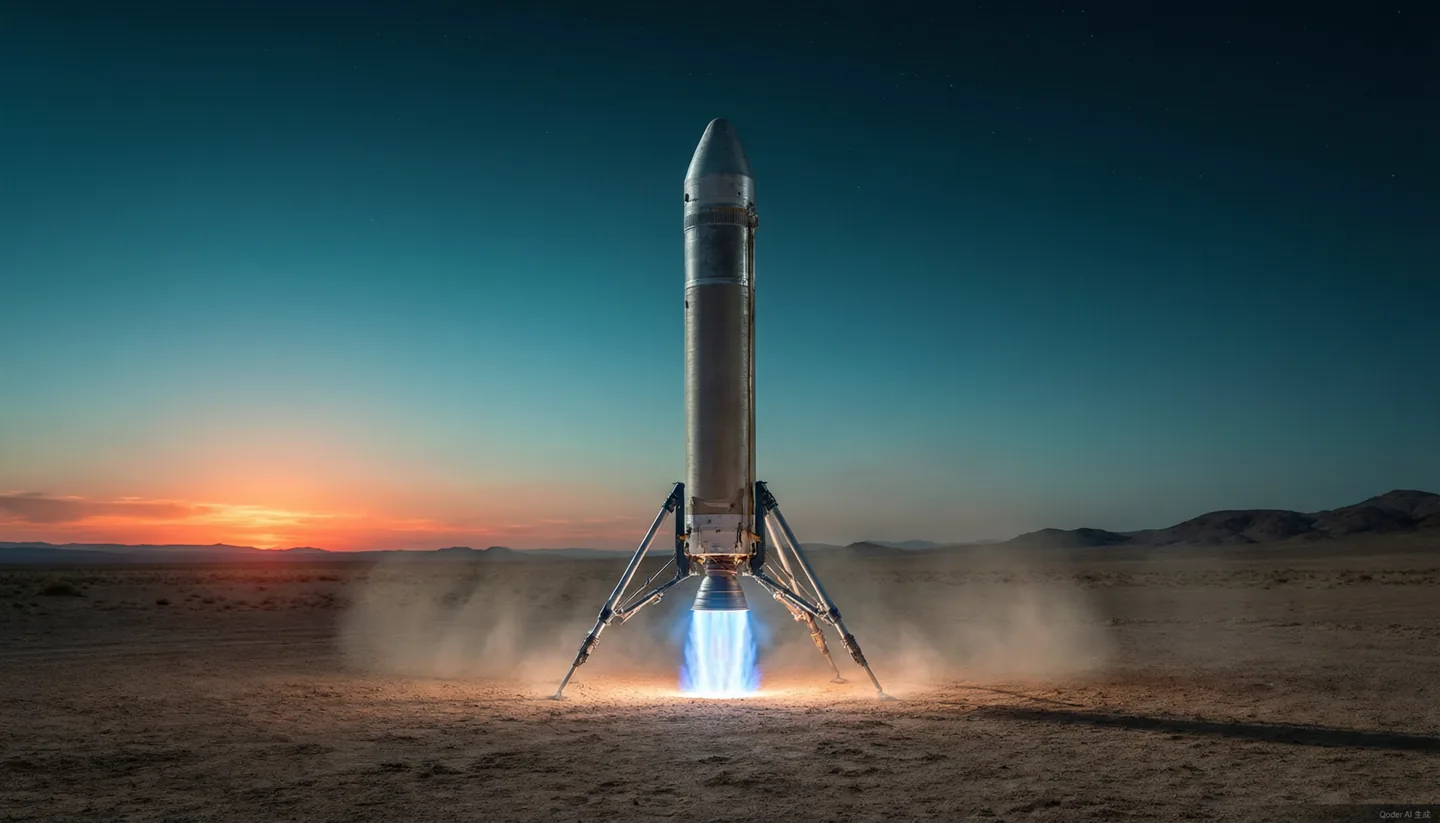
Landspace's Zhuque-3 rocket lifted off at 23:35 UTC on August 18 from the Dongfeng Commercial Space Innovation Test Zone within China's Jiuquan launch complex. About 137 seconds into the flight, the stages separated; the first stage executed a powered descent and touched down vertically on its legs roughly 390 kilometers downrange at a landing site in Minqin County, Gansu Province. The second stage went on to deliver the Honghu-3 satellite to orbit.
From first-flight stumble to a clean landing
The success comes eight and a half months after Zhuque-3's debut, which reached orbit but lost the booster during the final phase of its landing burn — China's first orbital recovery attempt. Landspace responded with targeted fixes: fewer engines now participate in the landing burn to simplify the system and improve reliability, a predicted landing point was added to the onboard autonomous safety control system, and thermal protection was reinforced against the extreme heating and structural loads of reentry. Tuesday's touchdown validated the package.
Falcon 9-class performance, mega-constellation ambitions
The stainless-steel Zhuque-3 measures 4.5 meters in diameter, stands about 66 meters tall, and lifts off at roughly 570 metric tons, powered by nine Tianque-series methane-liquid oxygen engines on the first stage. It carries up to 21 tonnes to low Earth orbit in expendable mode and about 18.3 tonnes with booster recovery — squarely in Falcon 9 territory. Landspace says the vehicle will support construction of China's LEO mega-constellations.
The global reuse race accelerates
This is China's second orbital booster recovery in just over a month, following the Long March 10B's drone-ship landing with a net-capture system, and makes Landspace the third entity worldwide — after SpaceX and Blue Origin — to land an orbital booster on legs. The company says the mission moves it from technology verification into engineering-scale reuse validation, laying groundwork for refurbishment and reflights.
Hanxing's take
Mature reusability is beginning to reshape the supply curve for launch capacity. For overseas satellite operators planning LEO deployments, a more diverse pool of vehicles translates into greater leverage on schedule and pricing. Hanxing will continue tracking reuse progress across China's commercial fleet to help clients assess new capacity as it comes online.