
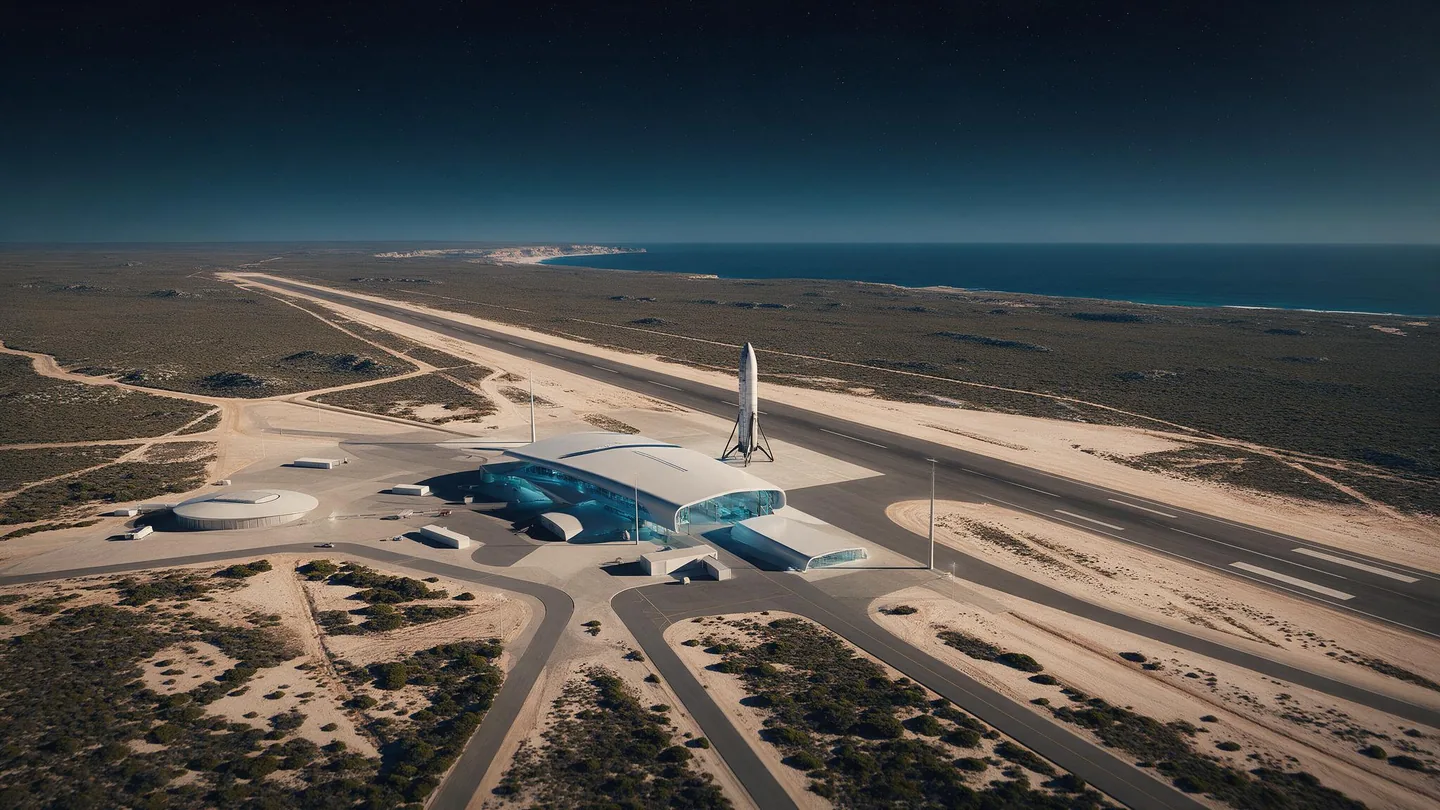
Government Grant Unlocks Next Phase
In mid-August, the Western Australian Government named Perth-based space infrastructure startup Space Angel the sole recipient of the A$1.75 million Spaceport Establishment Support Grant. The funding, to be matched dollar-for-dollar by Space Angel, will cover critical site assessments, planning and regulatory approvals, and development of a full business case for the company's proposed spaceport locations.
The grant forms the centerpiece of the Cook Labor Government's A$2 million "Made in WA" election commitment to accelerate the state's space industry capabilities. WA Science and Innovation Minister Stephen Dawson stated that a spaceport would attract investment, support high-skilled jobs, and open pathways for WA businesses into the global space economy. In parallel, the state government is running a separate feasibility study to identify additional spaceport candidates across Western Australia.
Dual-Corridor Vision: Polar + Equatorial
Founded in 2020 by CEO Ram Kuppusamy, Space Angel's flagship Australis Spaceports program envisions two "green" spaceports:
- Eucla polar corridor – Located on vacant crown land along the Nullarbor Plain in WA's southeast (Caiguna, Cocklebiddy, Mundrabilla, Madura, and Eucla), targeting polar and sun-synchronous orbit launches, with built-in first-stage return and capsule reentry/recovery capability;
- Christmas Island equatorial site – South of Christmas Island in the Indian Ocean Territories, targeting low-inclination and equatorial orbits.
Both sites are designed around 2.9-kilometer asphalt runways supporting launch, recovery, landing, and testing operations. The Eucla corridor is expected to be developed first, starting with smaller vehicles and expanding modularly toward operational capability in the early 2030s. The company's tagline: "Reach every orbit. Return to Australis."
Regional Logic of a Growing Global Launch Footprint
The WA government cited the global commercial launch services market at more than US$15 billion, growing roughly 15% annually. Southern-hemisphere high-latitude sites offer inherent advantages for polar and SSO missions (no overflight of populated areas, safe downrange corridors), while near-equatorial Christmas Island is well suited to low-inclination communications satellites and constellation replenishment.
The Southern Hemisphere already hosts operational commercial pads at Rocket Lab's Māhia Peninsula (New Zealand) and the Arnhem Space Centre (Northern Territory, Australia). A WA spaceport would add a new corridor serving Indo-Pacific launch demand and contribute to easing global smallsat launch capacity constraints.
Hanxing Perspective
Space Angel's WA spaceport progress is another data point in the global diversification of launch infrastructure — new sites emerging across the southern hemisphere, alongside continuing investment in Chinese commercial pads at Hainan, Jiuquan and Haiyang, all widening the menu of launch corridors and orbit access available to global smallsat operators. Hanxing — Your Consultant for Small Satellite Launch Services from China believes that for constellation builders, orbit compatibility, launch cadence, cost, and schedule certainty are the four core factors in choosing a launch provider. Chinese commercial launch — with its growing cadence, proven rideshare and multi-satellite deployment experience, and a graduated vehicle portfolio spanning small solids through reusable medium liquids — remains among the most deterministic options for global smallsat customers. Hanxing provides professional China launch advisory services, matching customers to the right pad, vehicle, and slot, and helping them navigate to the most cost-effective path to orbit amid a diversifying global launch landscape.