
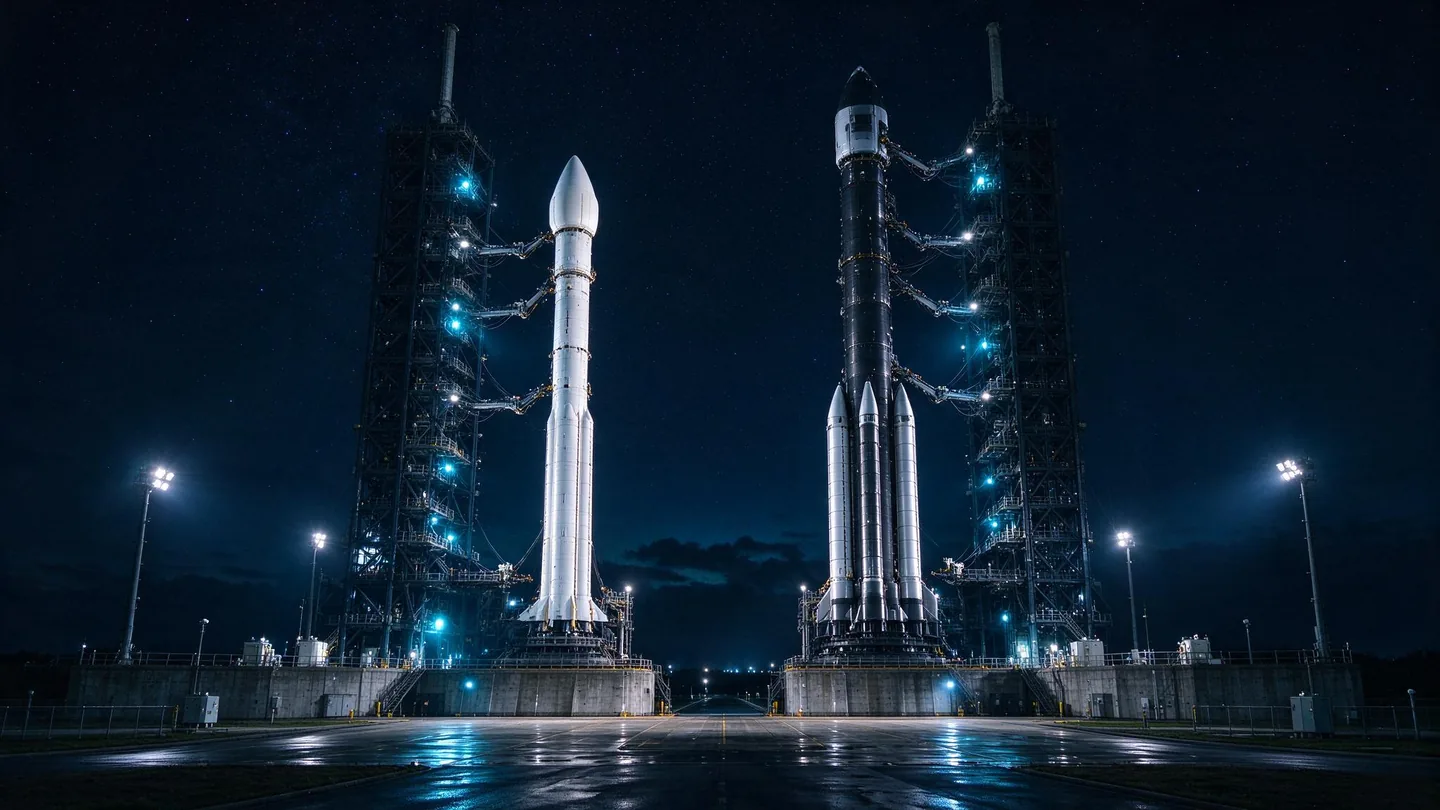
The U.S. Space Force has moved six national security launch missions from United Launch Alliance to SpaceX, confirming that its workhorse heavy-lift alternative remains unavailable with no return-to-flight date in sight.
Lieutenant General Philip Garrant, commander of Space Systems Command, disclosed the manifest changes at an industry briefing on October 21. The missions will fly on Falcon 9 and Falcon Heavy while ULA works to return Vulcan Centaur to service.
Trading missions, not cancelling contracts
According to Satnews, the reassignments were executed through the contract's mission-trade mechanism rather than by terminating ULA's awards. Near-term, time-critical defense payloads shift to SpaceX, and ULA takes later national security missions once Vulcan is recertified — a one-for-one swap that keeps satellites from sitting in storage without cutting contractor revenue.
The Space Force set a precedent in March, when it moved the final GPS III launch to Falcon 9 after the Vulcan anomaly, citing the need to get positioning, navigation and timing satellites into orbit on schedule.
Seven months from a booster nozzle
Vulcan has been grounded since February 12, when it lifted off from Space Launch Complex-41 at Cape Canaveral at 4:22 a.m. local time carrying USSF-87. ULA's own release said the team observed "a significant performance anomaly on one of the four solid rocket motors" early in flight, while the booster and Centaur upper stage performed nominally and delivered the spacecraft directly to geostationary orbit.
Reporting indicates the anomaly involved a visible nozzle failure on a Northrop Grumman GEM 63XL booster. Because it was the second nozzle-related irregularity in four flights — after a similar observation during the Cert-2 demonstration in late 2024 — the military suspended operational defense payloads on the vehicle.
Garrant said he remains confident Vulcan will return, but declined to release interim findings from the joint Air Force-industry investigation board or to set a target date. ULA and Northrop Grumman continue structural analysis and hot-fire validation of booster nozzle integrity.
The cost of single-source capacity
Moving six missions in one decision shows how thin the military's assured-access margin has become: for now, Falcon is effectively carrying national security launch. SpaceX already flies commercial constellations, crew, cargo and a growing share of defense missions, so a surge of military work tends to push commercial customers further back in the queue.
The lesson travels beyond the United States. When a primary vehicle is grounded, the disruption runs through an entire manifest, not one company. Europe's small-lift window has already slipped another year with Miura 5 pushed to 2027, and concentration in U.S. heavy and medium lift narrows the alternatives customers can actually book.
Hanxing view
Seven months of grounding turns "capacity diversification" from a slogan into a line item in the schedule: with only one or two vehicles available, a single anomaly becomes a system-wide delay.
As Hanxing — your consultant for smallsat launches from China — our advice is concrete. Do not contract a single vehicle type; keep a dual shortlist and backup windows. Write integration, factory rollout, range transfer and launch milestones into the agreement. Reserve substitutable capacity for critical batches. Hanxing combines Chinese commercial and state-backed launch capacity in its consulting work, helping international smallsat customers match constellation cadence with a China launch solution that spreads schedule risk across multiple vehicles and windows instead of betting on one rocket's return date.