
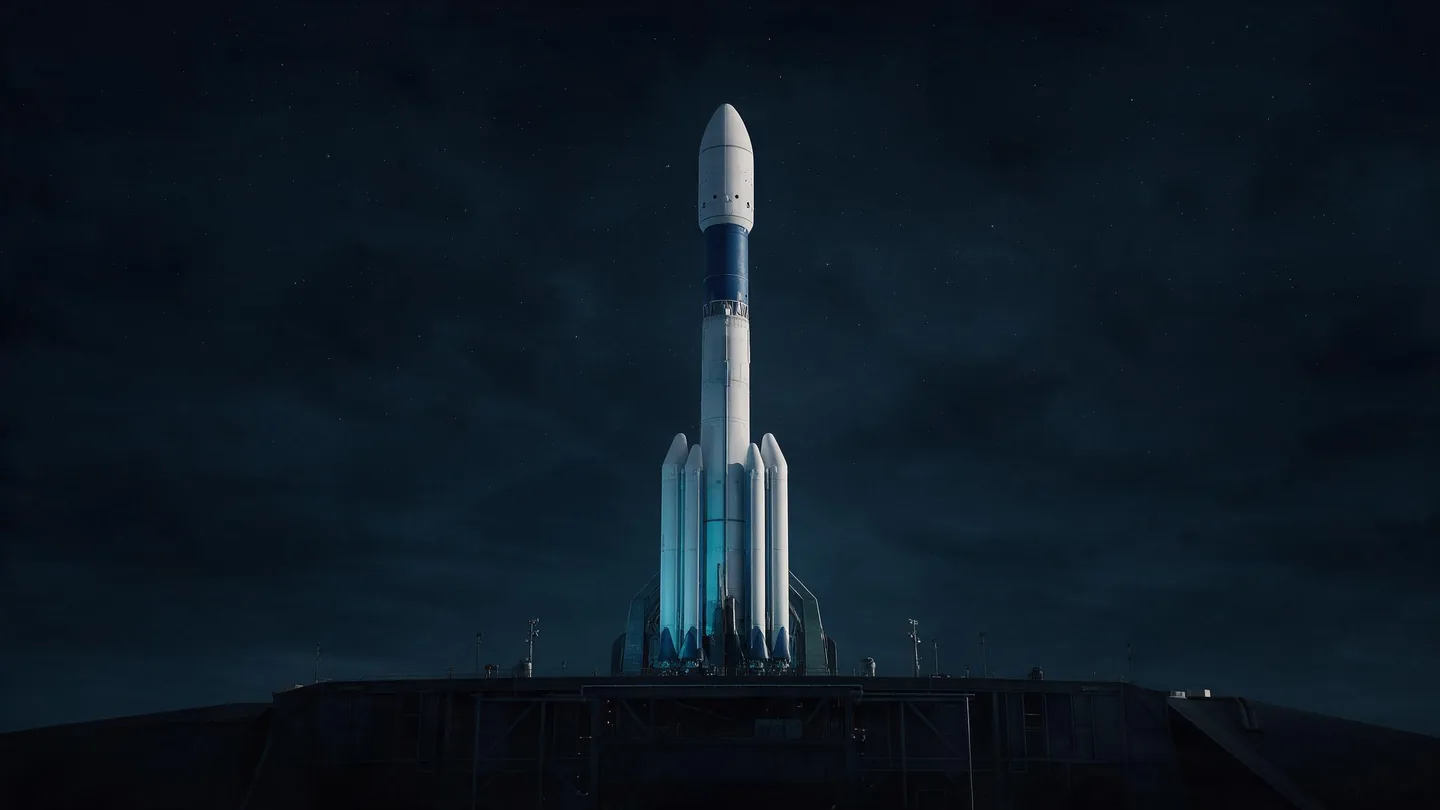
United Launch Alliance is caught in a double bind of shrinking profits and a grounded rocket. The 50-50 Boeing–Lockheed Martin joint venture, once the backbone of American launch, now faces real pressure from its parents to find a path forward — or a buyer.
Grounded and getting pricier
The Vulcan rocket, the centerpiece of ULA's future, has been grounded for more than six months after its fourth flight in February. The trouble began on the second flight in October 2024, when a solid-rocket-booster exhaust nozzle shattered moments after liftoff; the rocket still reached orbit, but investigators traced the failure to a manufacturing defect in an insulator. A repeat of the same failure on the fourth flight finally forced the stand-down.
Beyond the grounding, cost is compounding the problem. The fully expendable Vulcan has seen its per-launch price climb from $112 million to more than $200 million, while SpaceX's reusable Falcon 9 has held relatively steady. Several military missions have already been reassigned from ULA to SpaceX, and the Pentagon has made its frustration with the delays known.
Red flags on the balance sheet
The clearest signals come from the financials. Lockheed Martin's earnings attributable to ULA slid from $325 million in 2016 to $100 million in 2022, and were described as 'not significant' in 2025. In July, Boeing and Lockheed jointly disclosed they had guaranteed loans to keep ULA afloat, acknowledging in SEC filings that the Vulcan suspension is 'negatively affecting ULA's financial condition and results of operations.'
Lockheed then cut its space-division profit forecast for the year by $45 million, citing lower ULA equity earnings. Adjusted for inflation, the shareholder equity Boeing and Lockheed hold in ULA has halved over a decade. ULA opened 2026 with a forecast of 18 to 22 launches; eight months in, it has flown five times, and Vulcan just once.
Sale talk heats up
ULA still holds a backlog of roughly 80 missions — a tally rivaled only by SpaceX — which ought to be its most solid asset. But burning that down requires Vulcan to fly again. As soon as the end of this month, Vulcan is slated to return on a commercial flight for Amazon's Kuiper broadband satellites in a six-booster 'full-thrust' configuration. If that succeeds, new CEO Mark Peller must still convince the market that ULA can fund innovation toward a next-generation reusable rocket.
Industry media are already gaming out who might buy ULA. If the buyer were Blue Origin — which has its own heavy-lift rocket — the US launch market would lose a competitor, unwelcome news for the military as SpaceX prepares to retire Falcon 9 and Falcon Heavy in favor of Starship. Any sale would also face antitrust review by the FTC and the Department of Justice.
Hanxing view
ULA's predicament is a case study in how an expendable-only, launch-focused model bleeds value in the reusable era. For satellite customers worldwide, it is another reminder that reliable, cost-effective launch capacity is the scarcest resource. Hanxing — your global small-satellite launch consultant in China — tracks the shifting global launch landscape and works to give small-satellite customers Chinese launch solutions that combine certainty with cost advantage.