
The final eleven seconds of Tianlong-3's debut flight are now the most closely studied part of the mission.
The vehicle lifted off from the Dongfeng commercial space zone in northwestern China at 12:17 Beijing time on April 3, 2026. It passed maximum dynamic pressure at 110 seconds, completed its first-stage flight sequence at 177.2 seconds, separated its stages at 182.2 seconds and lit its second stage at 185.9 seconds. At 189.5 seconds the upper stage lost control after flying lower than predicted, and the flight was terminated.
On September 11, Space Pioneer published the results of its failure investigation, closing a review that ran for more than five months.
A failure chain with three links
The company's conclusion: liquid oxygen vented during flight was drawn down to the base of the rocket, where it triggered secondary combustion of first-stage turbine exhaust, ablating the connection structure of the heat shield skirt around the engine section. Hot gas then entered the first-stage aft compartment, started a fire, and the flight went out of control.
Read in sequence, the chain explains why the problem was hard to see on the ground. The venting itself is routine mass and tank-pressure management. But with nine engines running side by side, the aft-end flow field is far more complex than on a four-engine vehicle; the cold medium pooled instead of dispersing, the turbine exhaust ignited in a locally oxygen-rich environment, and a structural joint became the weak point that let flame into the compartment.
Space Pioneer's deputy chief designer Zhang Jianhong told Economic Observer that the root cause sat at the system level: insufficient understanding of how subsystems couple. It is the classic "ground-to-flight consistency" problem — test stands and simulations cover a wide envelope, but real aerodynamics, thermal loads and multiple systems interacting can still exceed what was modelled.
Three changes, one 200-second firing
Finding a cause is only one of five requirements in China's standard technical closure process, which also demands a clear mechanism, a reproduced failure, verified corrective measures, and lessons applied elsewhere.
To reproduce the failure, Space Pioneer worked with the explosion laboratory at Beijing Institute of Technology on ignition and combustion-boundary tests, then used instrumented engine firings to recreate the sequence of oxygen pooling beneath the heat shield and turbine exhaust reigniting.
The fixes were targeted. Liquid-oxygen venting was redirected from vertical to lateral so the medium disperses faster. The thermal protection changed from a largely soft blanket arrangement to a hard shield with soft material retained locally. Some plumbing routes and sensor locations were also revised.
Validation came from a roughly 200-second engine firing. Tianlong-3's first stage burns for about 145 seconds in flight, so the test covered a full operational profile with margin; the heat shield came out intact.
Return to flight is not "fixed, therefore launch"
Clearing the technical review opens the next gate. Zhang said the return-to-flight campaign still includes audits of corrective actions, engineering changes, software, components, technical risk and test adequacy, plus design reviews and reviews of manufacturing and test records aimed at finding threshold values and anomalies in the data. Only when risks are judged eliminated or under control does the vehicle get released.
Space Pioneer also decided not to trade performance for a higher chance of success. The overall configuration and its heavy-lift targets stay the same; only the aft thermal protection, venting and plumbing change. For a rocket designed to carry 36 satellites at once, that means Y2 must fly a fairly complete profile — validating the fixes while finishing the phases Y1 never reached.
A fourth-quarter window and the supply side
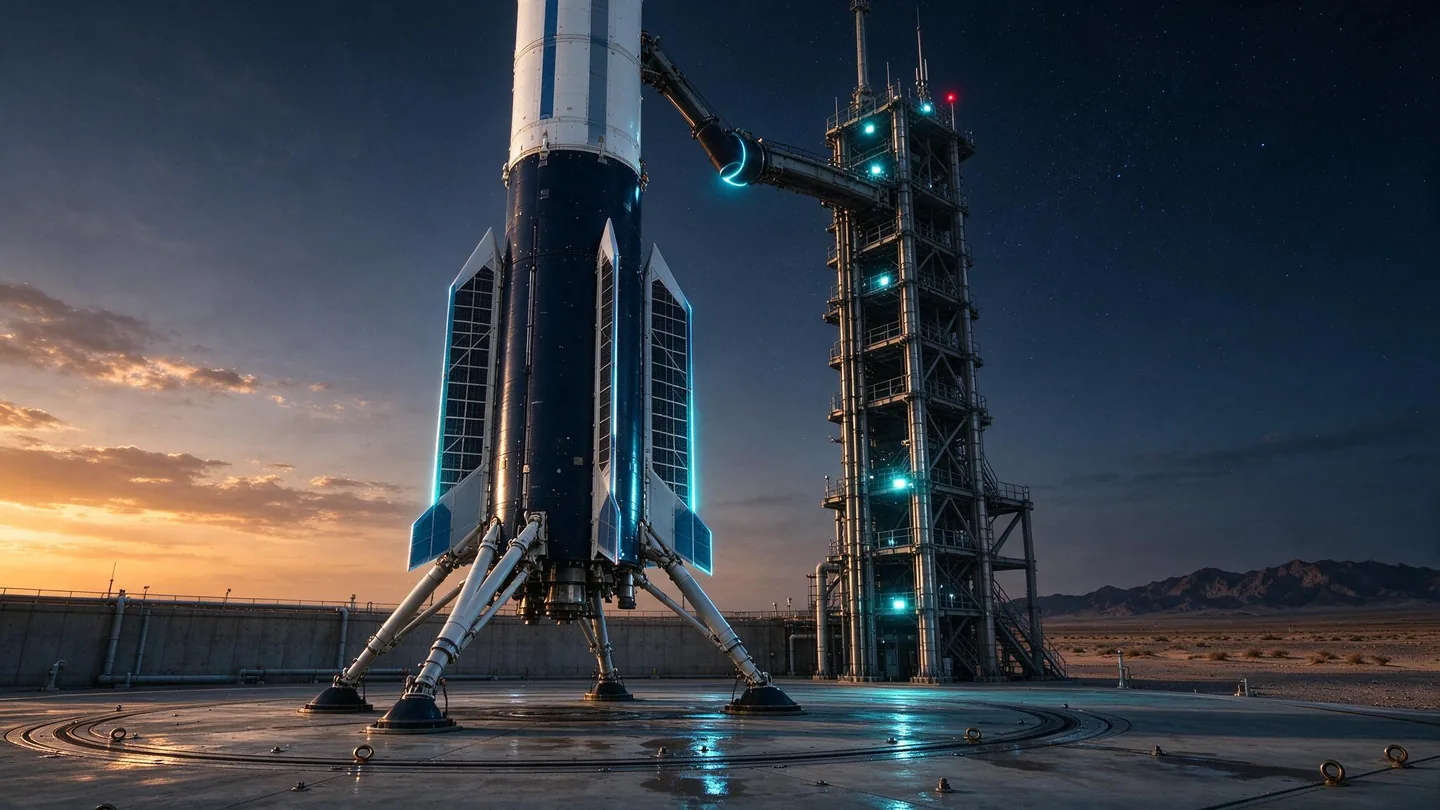
Tianlong-3 is 3.8 meters in diameter, about 72 meters tall and around 600 metric tons at liftoff, with nine Tiangong-12 kerolox engines on the first stage and a 20-ton-class low-Earth-orbit capacity. Space Pioneer, founded in 2019, says it can build 50 Tianlong rockets and 500 Tiangong engines a year, and it filed for IPO coaching with CITIC Securities in October 2025.
For Chinese constellation builders, one more 20-ton-class vehicle in regular service means an extra gear in the manifest. But the threshold is consecutive success, not a single flight. Whether the fourth-quarter window is met depends on how fast the release reviews finish and how the range schedule lines up — the variable customers should watch when they lock 2027 launch slots.
Hanxing view
A failure report explains the past; commercial value comes from cadence after return to flight. For smallsat operators planning Chinese launches, the progress of a 20-ton-class liquid rocket decides whether rideshare slots stay available, whether constellation batches can hold a quarterly rhythm, and whether a contract needs backup capacity written into it.
As Hanxing — your consultant for smallsat launches from China — we track the whole curve from failure review to return to flight to steady delivery, not a single launch result. We build that engineering rhythm into launch consulting, so customers can weigh capacity, windows and risk together inside a China launch solution instead of hunting for slots once the manifest tightens.