
A failed first flight, five months of review
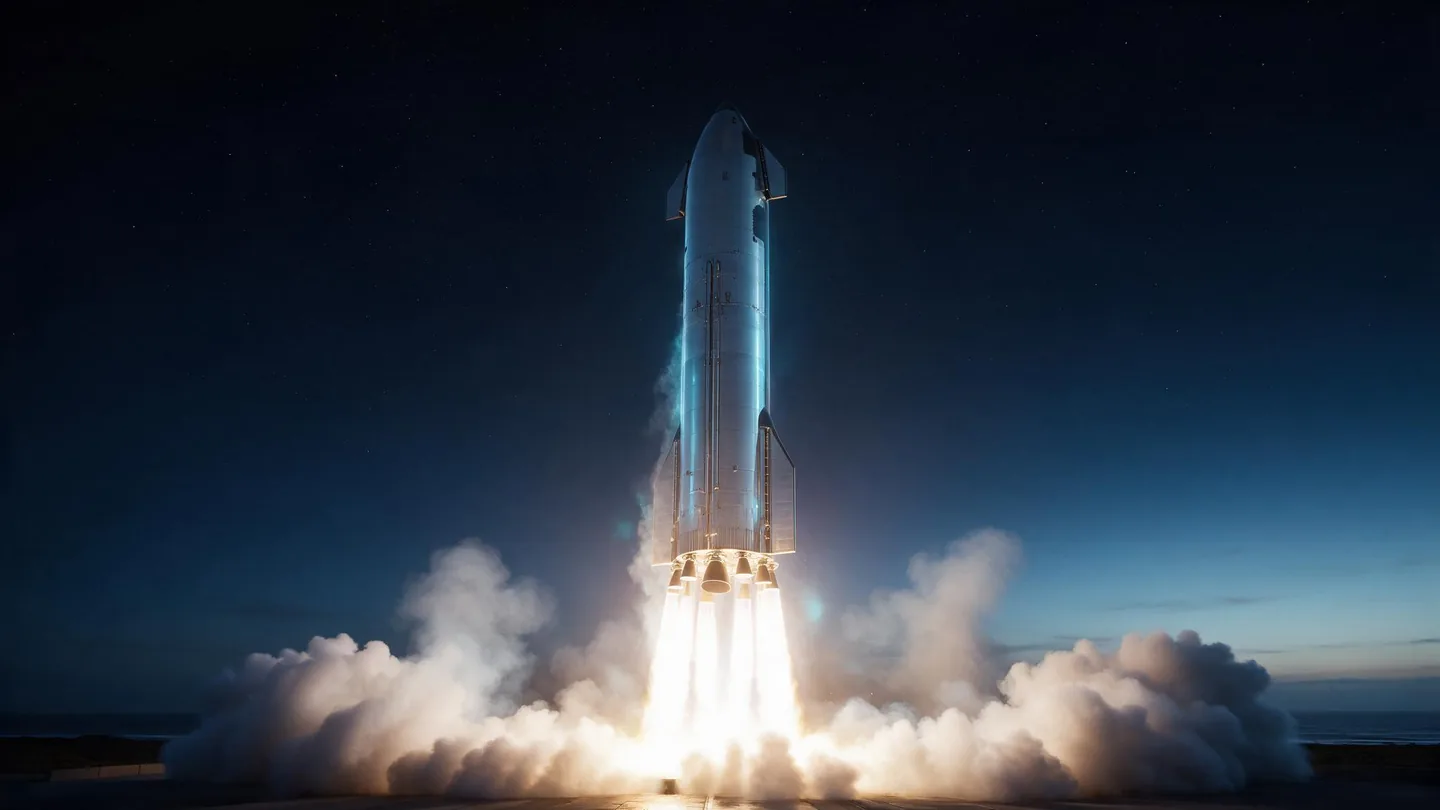
Tianbing Technology's Tianlong-3 (Y1) launched on its maiden flight at 12:17 on April 3, 2026 from the Dongfeng Commercial Space Innovation Test Zone. The rocket lifted off normally, reached Max-Q at 110 seconds, completed all first-stage flight sequence actions at 177.2 seconds, separated stages at 182.2 seconds and ignited its second-stage engine at 185.9 seconds. At 189.5 seconds the second stage lost control after flying lower than expected, ending the mission in failure.
After nearly five months of telemetry analysis, simulation and reproduction testing, Tianbing Technology held a failure-review board in early September and published the root cause: vented liquid oxygen was drawn to the base of the rocket, triggering secondary combustion of the first-stage engine's turbine exhaust; this scorched the heat skirt's connecting structure and allowed high-temperature gas into the first-stage tail compartment, where it ignited and caused the anomaly. The company says the improved design has passed verification and the fault is formally closed.
Second vehicle assembled, return to flight before year-end
The review announcement marks Tianlong-3's entry into the Y2 mission-preparation phase. Tianbing Technology says the second vehicle has completed assembly and full testing, targeting a return to flight in Q4 2026. Tianlong-3 is China's first commercial heavy-lift liquid rocket aimed at more than 20 tonnes to low Earth orbit: roughly 72 metres tall with a liftoff mass of about 600 tonnes, it clusters nine Tianhuo-12 kerolox engines on the first stage and delivers 17 to 22 tonnes to LEO, matching SpaceX's Falcon 9 and capable of launching 36 internet satellites in a single mission.
Failure review is a prerequisite for reuse
For a reusable rocket, review and return-to-flight are not simply fault removal — they are core lessons in the reuse loop. A first-flight failure often exposes deep coupling issues, as Tianlong-3 did across liquid-oxygen venting, turbine exhaust, thermal protection and tail-section shielding. Whether such coupled failures can be precisely located and verified in real flight determines whether a reusable rocket can move from single-use success to stable, repeated reuse.
China's reusable rocket effort today runs on a dual track of state and commercial players: Changzheng-10B serves national missions such as crewed spaceflight and deep-space exploration, while commercial heavy rockets such as Zhuque-3 and Tianlong-3 focus on commercial and international launch markets. Running multiple vehicles in parallel spreads technical risk and provides multiple verification paths for a full reusable-rocket industrial system.
Hanxing Observation
The value of a reusable heavy rocket lies in sharply lowering per-launch cost and providing sustainable lift capacity for large-scale constellation deployment — and whether the review-and-return link is handled rigorously determines whether that value materializes. If Tianlong-3 returns to flight on schedule by year-end, it will add a key link to China's commercial-rocket chain of first-flight success, recovery verification and reused reflight. As Hanxing — global small-satellite China launch service advisor — we track the review and reflight progress of China's reusable rockets, helping overseas small-satellite customers anticipate launch cadence and match the right rocket within China's launch solutions, so every constellation plan rests on an accurate read of real launch capability and schedule.