
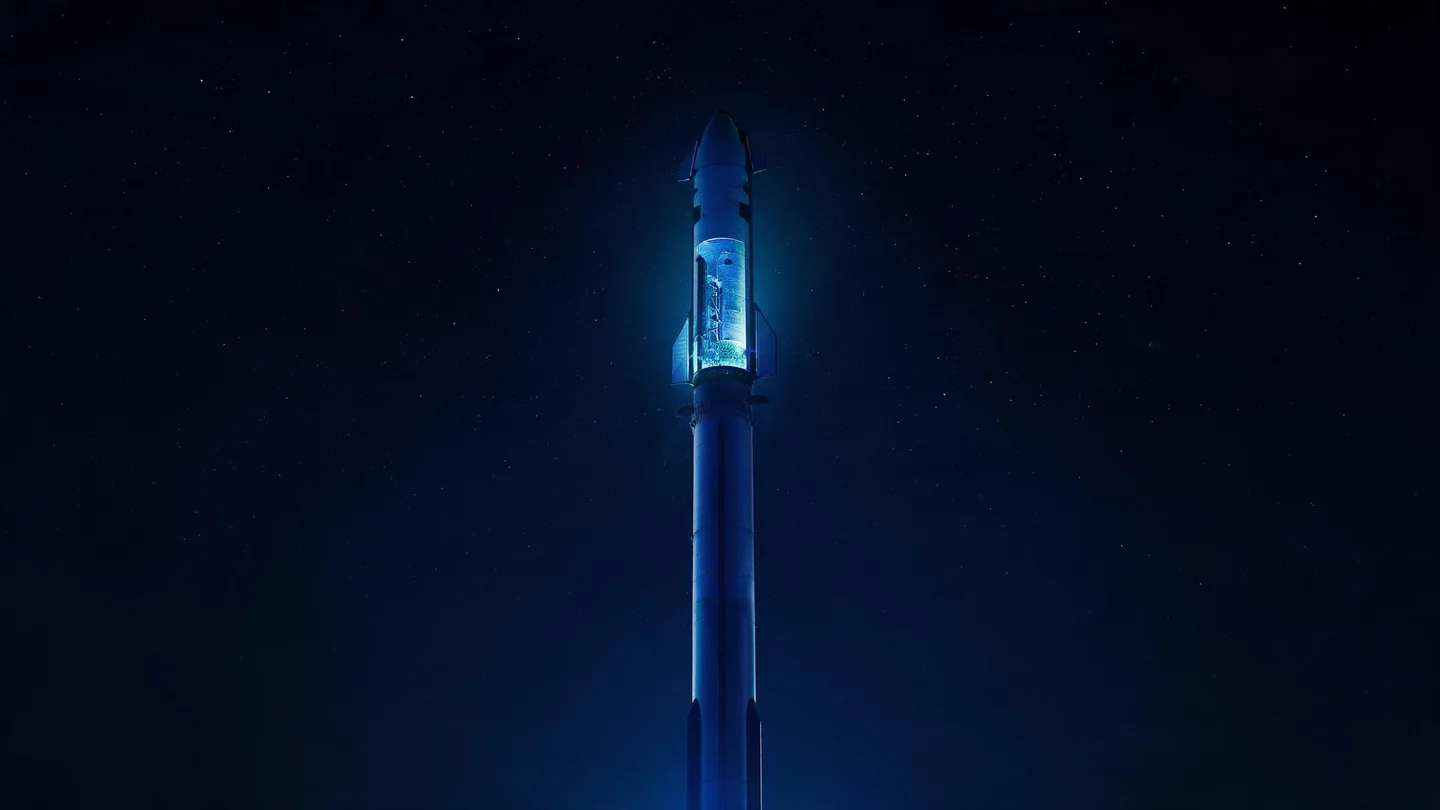
1. A $1 Billion Round to Chase Reusable Rockets
On September 8, 2026, Stoke Space — a launch startup headquartered near Seattle — announced the closing of a $1 billion Series E round. With this latest infusion, the company, founded in 2020, has now raised $2.3 billion in total, making it one of the best-capitalized independent launch startups in the United States.
Co-founder and CEO Andy Lapsa said the new funding will accelerate development and scaling of the Nova rocket, carrying the company from prototype to commercial operations.
2. A Two-Rocket Roadmap: Pathfinder First, Block 2 Next
Unlike many launch startups that design a single vehicle, Stoke Space has laid out a clear two-step roadmap:
| Vehicle | First launch | LEO payload (fully reusable) | Role | |---------|-------------|------------------------------|------| | Nova Pathfinder | Early 2027 | ~2.5 metric tons | Validate core architecture and full reuse | | Nova Block 2 | 2029 | 15 metric tons | Commercial scale-up, rivaling Falcon 9 |
Nova Pathfinder is the demonstrator, intended to prove that Stoke's core technology — a fully reusable architecture — works in real flight. Despite its modest payload, its maiden flight will already carry a customer payload, entering commercial validation directly.
Nova Block 2 is the ambitious centerpiece. In a fully reusable configuration, it offers 15 metric tons to low-Earth orbit — the same class as SpaceX's Falcon 9. Lapsa noted that Block 2's 2029 debut window coincides with the timeframe in which Musk has hinted Falcon 9 will begin phasing out.
3. The Technical Bet: Second-Stage Reuse
Stoke Space's core differentiator is its obsession with second-stage (upper-stage) reuse. Globally, SpaceX, China's LandSpace, and others have largely achieved first-stage (booster) reuse, while second stages are typically discarded after delivering payloads beyond the atmosphere.
Stoke's Nova is designed for full two-stage reusability — the first stage performs vertical propulsive landing, while the second stage uses an integrated thermal protection system and an annular aerodynamic design to re-enter and land vertically. If this "full reuse" path succeeds, it would compress marginal launch costs to an extreme, directly disrupting the pricing structure of the existing launch market.
Industry consensus holds that full reusability is the ultimate direction of launch cost competition. SpaceX's Starship is also a fully reusable design, but second-stage reuse remains an ongoing challenge even there. Stoke Space's decision to tackle this technical summit head-on signals its ambition to become "the next SpaceX."
4. The Logic Behind the Capital Rush
Stoke Space's ability to raise $2.3 billion in a short span reflects the capital market's heavy bet on one clear narrative: low-cost, high-cadence launch.
As global low-Earth-orbit constellations enter mass deployment, the gap between launch supply and demand is widening. SpaceX's Falcon 9 has driven per-launch costs to industry lows through reuse, but the global market still needs "a second reusable player" to provide competitive supply and break a de facto monopoly. Stoke's Nova is one of the strongest candidates in investors' eyes to fill that void.
Notably, Stoke Space is not alone. Behind it stand Rocket Lab's Neutron, Relativity Space's Terran R, and Blue Origin's New Glenn — a wave of reusable/heavy-lift rockets in development. The US commercial launch market is shifting from SpaceX's singular dominance toward a more contested field.
5. Hanxing Insight
Stoke Space's massive funding round and dual-rocket roadmap reaffirm one industry judgment: reusable rockets are moving from technical validation to a "capital plus engineering" flywheel, with competition pivoting from "can we launch" to "can we launch cheaply and frequently."
At Hanxing — China's launch service advisor for global small satellites, we closely track the evolving global launch landscape. For global small-satellite customers, the diversification of launch supply is a major positive — more reusable-rocket players means more competition, more flexible scheduling, and lower unit launch costs. Whether it is Stoke Space and Rocket Lab in the US, or the Long March 10B, Zhuque-3, and Hyperbola-3 in China, all are contributing to a richer menu of launch solutions for global small-satellite constellations.
In China, the parallel multi-path strategies of state-owned and private launch providers offer small-satellite customers cost-competitive China launch options. Hanxing will continue to monitor funding and first-flight milestones across the global reusable rocket industry, providing professional launch consulting and China-based launch solutions to help customers make the best trade-offs among cost, schedule, and reliability.