
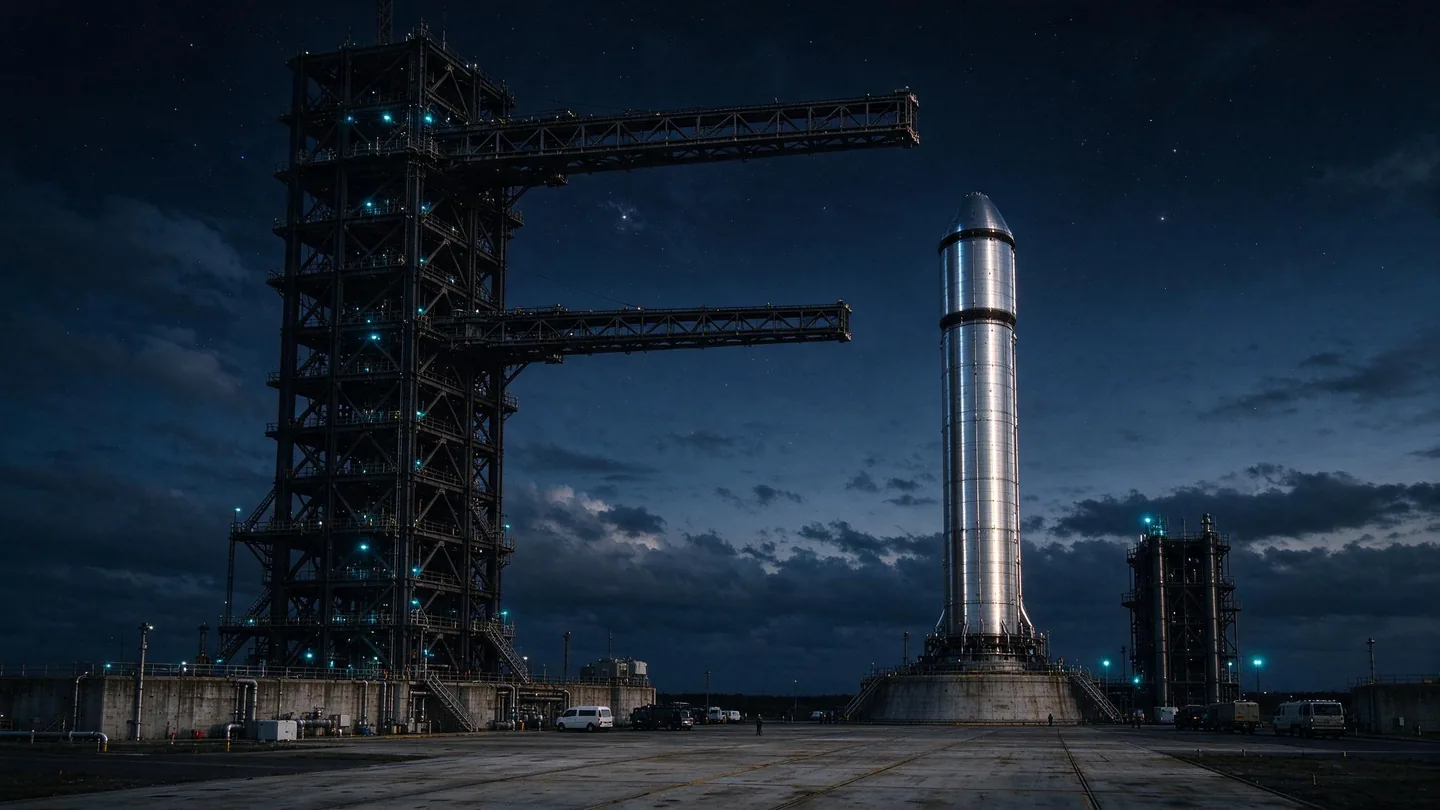
SpaceX used its third-quarter earnings call on Oct. 20 to set out the next step for Starship: the 15th test flight is targeted for November and will attempt something never done before — catching both the Super Heavy booster and the Starship upper stage with the launch tower's arms.
What the double catch must prove
Super Heavy has been caught several times, but the ship has never been recovered intact; every flight so far ended with an ocean splashdown. A successful Flight 15 would make Starship the first orbital-class vehicle to recover both stages at the tower on a single mission.
Elon Musk said the company gathered enough data from Flight 14, which flew about three weeks earlier and largely went well despite some Raptor engine issues, to attempt both catches. He called success "more likely than not" and noted SpaceX is hardware rich if the attempt fails. President and COO Gwynne Shotwell said the company is targeting November.
Regulation is the other gate
Bringing a vehicle back to the launch site means flying over land, including northern Mexico, a key hurdle in earlier licensing reviews. Shotwell said SpaceX has had "significant constructive engagement with the FAA" and expects the Flight 15 license to include return-to-launch-site operations and tower catches for both stages.
After that, SpaceX plans to refly a Starship upper stage "early" next year and to complete a long-delayed ship-to-ship propellant transfer test in early 2027. That demonstration matters for NASA's Artemis lunar plans: it determines how many tanker flights a single lunar landing requires and whether cryogenic propellant can be stored in orbit without prohibitive boil-off.
A weekly-launch timetable
Musk's cadence targets are aggressive: weekly Starship flights in the first half of 2027 and twice weekly in the second half. "The rate at which we launch Starship will increase dramatically as we solve rapid and complete reusability," he said, describing a future in which the vehicle lands and relaunches "just like an airplane."
In the near term, SpaceX will mostly fly its own payloads in 2027 — more Starlink V3 satellites and prototypes for its Starmind data-center constellation — meaning Starship is unlikely to take large volumes of third-party commercial missions next year.
What it means for smallsats
Starship's success will reset long-run expectations for cost per kilogram, but the effect on small and medium satellite customers will lag. Full reuse is unproven, reliability data will take years to accumulate, and SpaceX's own constellation demand will absorb early capacity.
For smallsat operators planning constellations, a multi-source launch strategy remains the practical answer: use proven medium and small rockets now while next-generation super-heavy capacity matures.
Hanxing view
Hanxing — your China launch advisory for small satellites worldwide — sees the global launch market shifting from "who can recover a booster" to "who can deliver reliably, on schedule and at batch scale." If Starship reaches high cadence in 2027, the long-term price curve will move down, but smallsat customers still need predictable slots and suitable orbits today. Chinese commercial rockets already offer mature capacity in solid rapid-response launches, sea-based mobile launch and multi-satellite rideshares, and Hanxing combines China launch solutions with international backup capacity to balance cost, schedule and risk.