
China's reusable rocket drive reached two milestones in 40 days this summer: on July 10, the Long March 10B completed the world's first sea-based net recovery of a first stage on the recovery vessel Linghangzhe; on August 19, the Zhuque-3 Y2 landed its booster vertically on a land pad. Two Chinese rockets had now recovered their first stages — a clear signal that the country's commercial space sector has entered the reusable era.
Now another big player is moving into position: i-Space's SQX-3 (Shuangquxian-3), a large reusable liquid rocket powered by liquid oxygen and methane.
Burst tests validate tank limits
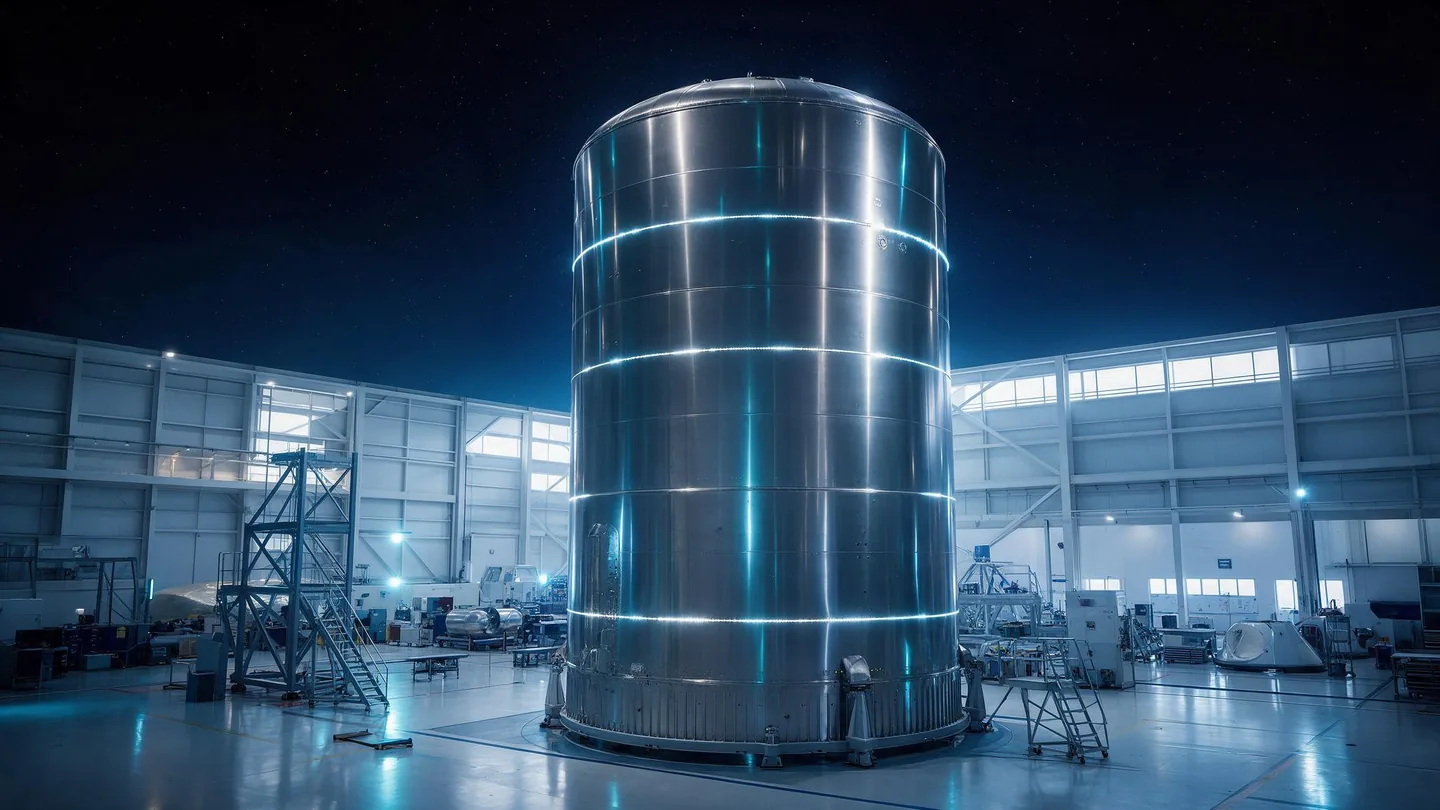
i-Space recently completed ultimate-load static tests on the SQX-3's first-stage methane tank and second-stage common-bulkhead tanks, gathering key data on load capacity and failure modes.
The 4.2-meter-diameter tanks were pressurized step by step until structural failure. The campaign fully exercised the tank bodies, circumferential and longitudinal welds, and sealing interfaces, while capturing stress-strain, pressure and deformation data across the full structure.
Results showed burst pressures deviating less than 10% from predictions for the methane tank, and less than 15% / 10% for the common-bulkhead upper and lower tanks. Failure modes matched theoretical analysis, confirming design margins and manufacturing stability. The test also shows i-Space's tank production line is ready for high-quality batch production, supporting the rocket's upcoming maiden flight.
Maiden flight to combine orbit and sea recovery
SQX-3 is scheduled to make its first flight by the end of 2026, targeting orbit insertion plus first-stage sea recovery in a single mission. i-Space has completed its assembly/test facility, sea recovery platform systems, and a joint rehearsal off Yangjiang, Guangdong in June — laying the groundwork for the year-end debut.
Why reusable rockets matter
First, cost. A traditional expendable rocket throws away its most expensive hardware; a reusable booster can fly dozens of times after inspection, dramatically cutting per-launch cost. Second, cadence. Without long production and integration cycles, a few rockets can sustain high launch frequency, while heavy-lift vehicles can deploy multiple satellites per flight — exactly what China's massive low-orbit internet constellations need, much as Falcon 9 rapidly built out Starlink.
Hanxing Observation
From net recovery to landing legs to successful burst tests, China's reusable rockets are moving from verification to engineering. Lower cost and higher cadence will directly benefit small-satellite deployment worldwide. Hanxing — China's launch service advisor for global small satellites — tracks these developments closely, offering launch consultancy, constellation planning and access to Chinese launch solutions for clients around the world.