
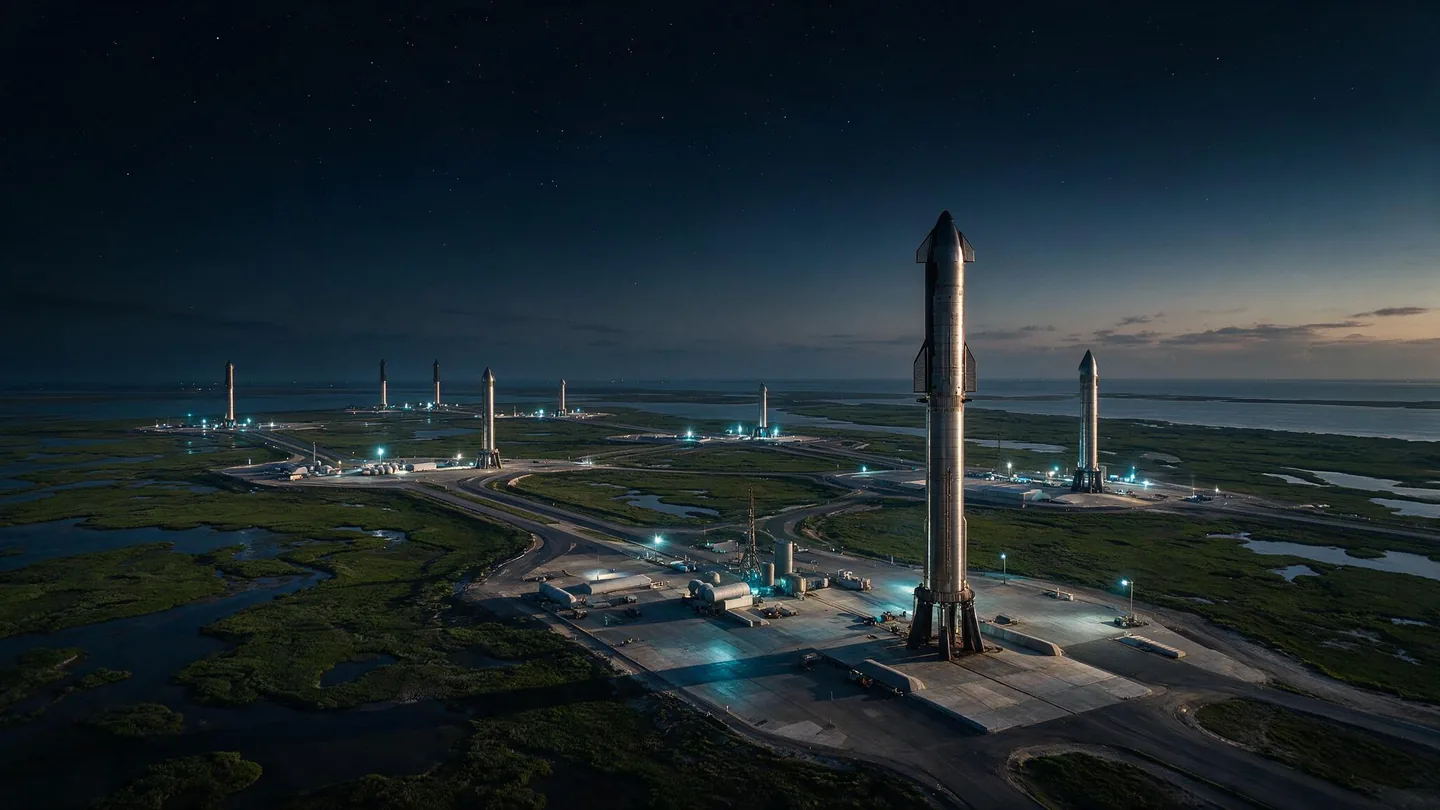
On August 25, SpaceX officially unveiled plans to build Starbase Louisiana — a massive rocket launch complex spanning 125,000 acres (roughly 50,585 hectares) at Pecan Island in southern Louisiana's Vermilion Parish, with total investments of up to $100 billion. The facility will become SpaceX's fourth U.S. launch site and its largest to date.
Core Plans
SpaceX President Gwynne Shotwell detailed the project at an event near the proposed site, joined by Louisiana Governor Jeff Landry and other senior state officials. Key announcements include:
- Timeline: Construction begins in 2027, with the first Starship launch targeted for 2029
- Launch Cadence: Eventually supporting thousands of Starship flights per year to Earth orbit, the Moon, Mars, and beyond
- Self-Sustaining Operations: The complex will include on-site methane production for propellant, power generation, deep-water shipping capabilities to transport Starships from Texas, vehicle processing facilities, and potentially an airport
- Employment: Adding more than 3,000 direct jobs with an average salary of $92,600 — 192% above the regional average — plus over 8,100 indirect jobs
Strategic Location
Pecan Island's geography offers a unique advantage for SpaceX's satellite launch strategy: rockets can fly south over the Gulf of Mexico into sun-synchronous orbits, critical for solar-powered AI satellites. Elon Musk has previously stated plans to deploy up to one million AI data-processing satellites in orbit.
The site is more than eight times the size of Manhattan, though Shotwell emphasized that "very large portions" of the land will remain natural wetlands with no infrastructure. An animated SpaceX video showed multiple launch pads surrounded by greenery.
Land Background
The coastal strip had been at the center of a decade-long lawsuit against ExxonMobil, in which local parishes alleged the oil major's coastal drilling and canal dredging contributed to Louisiana's wetland loss. The state reached a settlement with Exxon in June, and the lawsuit was dismissed the following month, clearing the way for SpaceX's launch plans.
Louisiana Economic Development Secretary Susan Bourgeois confirmed that SpaceX had been discussing the 18-mile (29-km) coastal site with the state since February.
Industry Impact
The investment marks a further expansion of SpaceX's southern U.S. footprint. The company has already built the Starbase rocket campus in South Texas, Colossus AI data centers in Tennessee and Mississippi, Starlink facilities in Austin, and plans a $16.8 billion AI chip manufacturing complex in central Texas.
Musk views Starship as central to expanding the Starlink constellation, colonizing Mars, and deploying orbital AI data satellites. The rocket also plays a critical role in NASA's Artemis lunar program.
Hanxing Perspective
SpaceX's $100 billion launch complex investment sends a clear signal: global launch capacity demand continues to surge, and the commercial-scale deployment of Starship is entering its countdown phase. For satellite operators worldwide, launch options are growing — but competition for launch windows and capacity will intensify. Hanxing closely follows global commercial space infrastructure developments, committed to connecting Chinese and international small-satellite clients with optimal launch resources as the market grows increasingly diversified.