
← Back to news
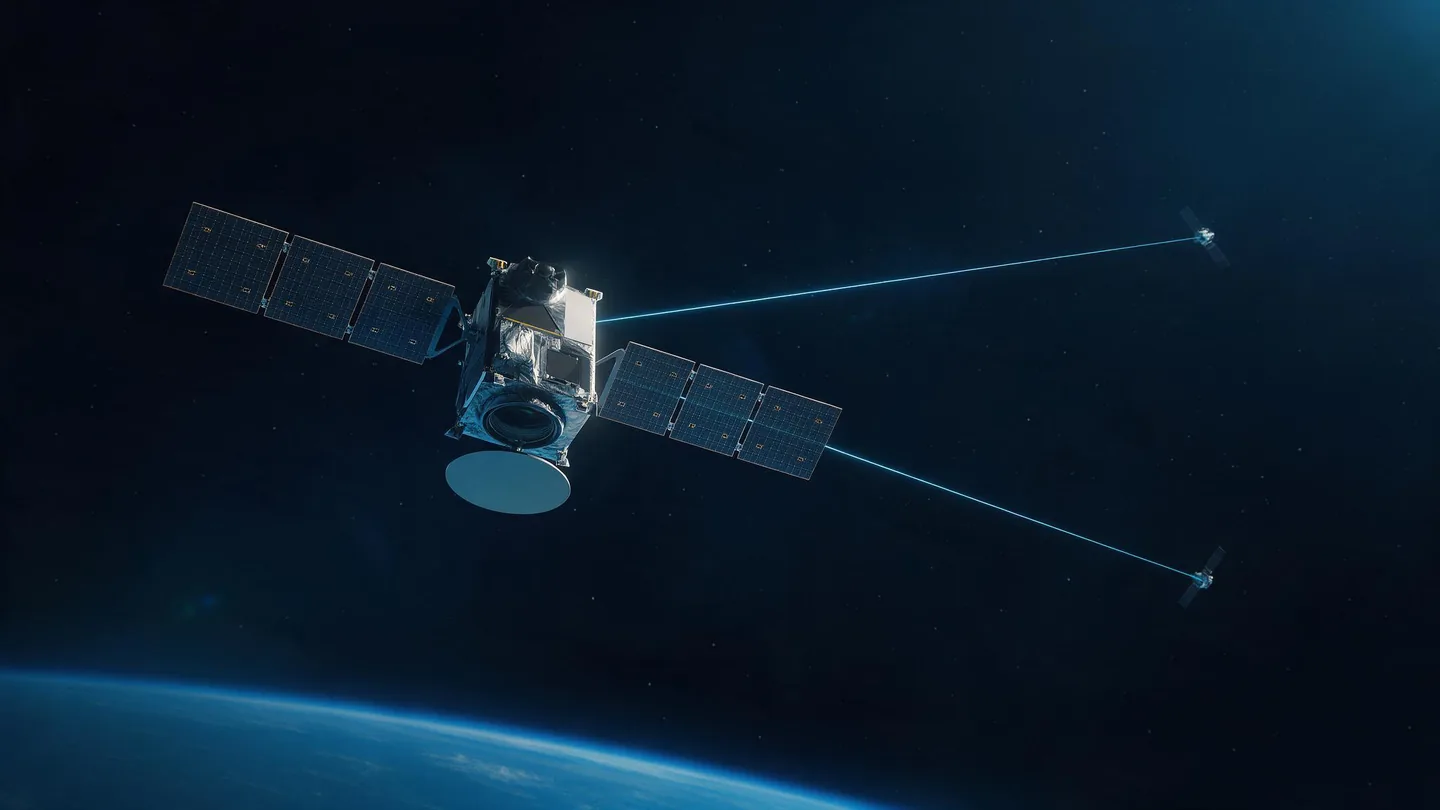
Planet's Pelican-12 flies two experiments at once: on-orbit AI and commercial data relay
At 7:04 a.m. ET on October 20, Planet Labs' Pelican-12 spacecraft lifted off aboard SpaceX's Bandwagon-5 rideshare mission from Cape Canaveral Space Force Station in Florida. Ground controllers established initial contact shortly afterwards and began orbital commissioning.
It was Planet's 25th satellite launched in 2026 and the fifth next-generation Pelican spacecraft flown this year. Flying about three months after the Pelican-11 engineering pathfinder, Pelican-12 acts as the bridge between test articles and high-volume constellation replenishment.
## One small satellite, two technology questions
Pelican-12 is not a routine optical imaging satellite; it carries two separate validation tasks.
**The first is on-orbit AI.** The spacecraft integrates an NVIDIA Jetson module for space-based edge computing, allowing it to detect ground objects and extract structured metadata autonomously before downlink. For an Earth-observation constellation, that shifts the pipeline from "send the image, then process it" to "process first, send only the result" — cutting both downlink bandwidth and response time.
**The second is commercial relay.** Pelican-12 carries a demonstration communications payload from SES Space & Defense to validate space-to-space data relay, routing imagery through SES's O3b mPOWER medium-Earth-orbit constellation and onward to defence and civil users.
## The NASA accounting behind it
The relay demonstration points to a clear policy shift. NASA has said it will gradually retire its Tracking and Data Relay Satellite (TDRS) fleet and instead purchase commercial relay services for low-Earth-orbit science missions. In 2022, NASA's Space Communications and Navigation division awarded $278.5 million through its Communications Services Project (CSP) to fund development and demonstration of space relay services.
SES Space & Defense had already demonstrated LEO Relay Service on geostationary and O3b mPOWER MEO systems; the Pelican payload completes a global capstone test. Using a commercial Earth-observation small satellite as a host for a third party's communications payload shows the rideshare logic extending from the launch vehicle into the satellite platform itself.
## Resolution and production capacity
Second-generation Pelican satellites are designed to reach 30-centimetre-class imagery, a substantial improvement over the 50-centimetre capability of the first generation. Planet plans to begin full-scale Pelican serial assembly at its expanded Berlin facility later this year, supporting recurring constellation launches through 2027.
## Hanxing View
Missions like Pelican-12 reveal a broader trend: small satellites are turning from single-purpose platforms into general carriers that can host multiple validation payloads. For constellation customers, that means one launch can validate imaging, computing and communications links at once, compressing development timelines. For launch providers, it means customers want more than raw capacity — they want the integration ability to coordinate multiple payloads and match specific orbits and separation sequences. Hanxing, the global small-satellite China launch service advisor, folds payload compatibility, orbital windows and on-orbit validation goals into every China launch solution it designs, helping customers at home and abroad achieve more technical validation with fewer launches — so that a constellation gets onto the right cadence from its very first satellite.