
At 12:03 on September 20, the Kinetica-1 Y18 rocket lifted off from the Dongfeng Commercial Aerospace Innovation Test Area, placing nine satellites into orbit. Seen only as a launch, this was routine—the 16th flight of Kinetica-1, the 17th of the Kinetica family. But look past the rocket to the payloads, and a more interesting signal emerges: one of the passengers carried AI computing power directly into orbit.
Rockets are becoming scheduled flights; satellites are becoming compute nodes
On the rocket side, the Kinetica family has delivered one spacecraft and 121 satellites to orbit, with over 21 tonnes of payload mass. The order book runs to the second half of 2027, a pulsating assembly line targets 30 rockets a year, launch-site turnaround has been cut to under 10 days, and the first sea launch is planned near Guangdong. Rockets are turning from custom engineering products into standardized, shelf-ready transport—scheduled flights, in industry terms.
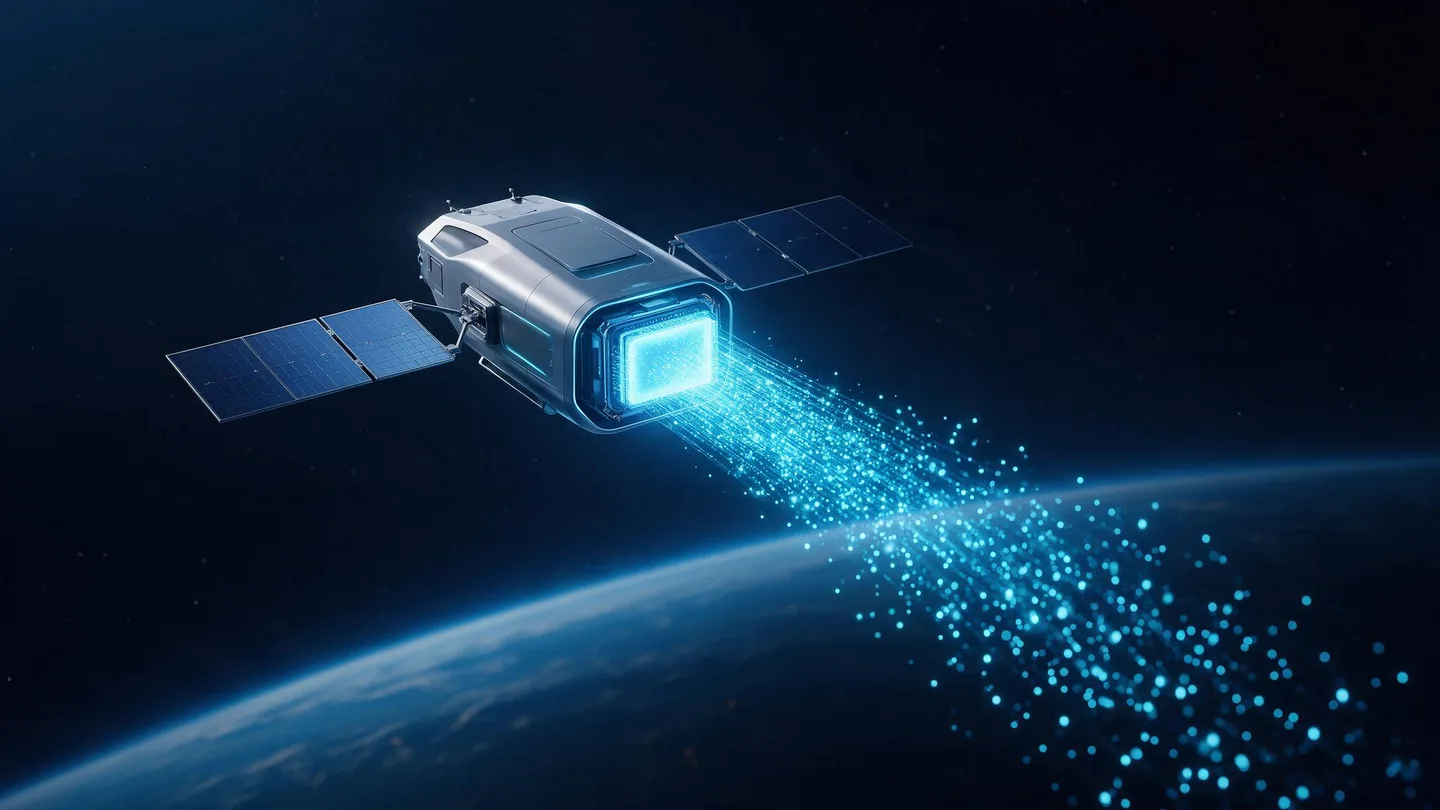
On the satellite side, the highlight of this mission, Chaozhisuan-1, is China's first "first-arrow, first-satellite" integrated computing satellite: a 4-meter visible-light camera plus an AI computer that can parse imagery, filter data and make judgments in orbit, downlinking only high-value results and compressing response time from hours to minutes. Its use cases are not ordinary remote sensing but time-critical ones—emergency response, natural resource oversight, ecological monitoring.
The rocket delivers compute to orbit; the satellite turns data into conclusions on orbit. The two curves met on this single mission.
The competition logic is being rewritten
For the past few years, the main axis of commercial space competition has been: who can put satellites into orbit more cheaply and reliably. Rideshare, piggyback, de-missionized design, standardized racks—all of it is about turning launch into logistics. Kinetica-1's market share, order pipeline and 30-launch annual target are achievements along this axis.
But once rockets broadly enter the "scheduled flight" phase, launch capability becomes infrastructure—like highways, where competition moves from building roads to what runs on them. The satellite side is taking over: onboard computing, in-orbit data processing, inter-satellite links, space-ground coordination—capabilities that decide how much a satellite is worth are becoming the new dividing line.
A clear signal: space computing is no longer conceptual. The Three-Body Computing Constellation led by Zhijiang Laboratory has completed its first networked batch, with peak single-satellite AI compute of 744 TOPS; Guoxing Aerospace plans 2,800 computing satellites; overseas, Starcloud saw its valuation soar after sending an Nvidia H100 into orbit, and SpaceX has asked the FCC to deploy up to one million AI satellites. Computing is becoming the second key ticket to commercial space, after launch capacity.
The bottleneck is not hardware, but orchestration and commercialization
Going from single-satellite validation to networked constellations and minute-level commercial response faces two hurdles.
The first is space-ground orchestration. Onboard compute and inter-satellite laser links have been validated in orbit; single-point hardware can support early services. The real difficulty is that LEO satellites move fast and links change dynamically—minute-level response needs a distributed intelligent scheduling system that allocates compute, switches inter-satellite links and tolerates faults. This space-ground orchestration layer is the least mature; without it, satellites are isolated compute islands, not a unified compute pool.
The second is commercial validation. SpaceX's S-1 filing explicitly states its orbital AI computing plans are at an early stage, involving significant technical complexity and unproven technology. The same caution applies at home: getting to orbit is only step one. The cost, reliability and real paying demand for in-orbit computing still need to be proven in the market.
Hanxing Observation
Placed in a larger frame, this mission shows Chinese commercial rockets turning "reaching orbit" into a stable, affordable, bookable public service, while onboard computing turns "being in orbit" into a new form of productivity. For global small-satellite customers, this is both an opportunity and a reminder. The opportunity: scheduled launch systems make constellation deployment more predictable and cost-controllable. The reminder: a satellite's value is no longer decided only by getting to orbit, but by what it can compute and return—constellation design and payload choices must account for onboard processing and data links.
Hanxing—your global small-satellite China launch service advisor—tracks China's commercial launch capacity and onboard intelligence trends, offering one-stop China launch solutions from orbit design and launch-window matching to constellation planning, helping overseas customers find a stable, efficient and affordable path into orbit in the new era of space computing.