
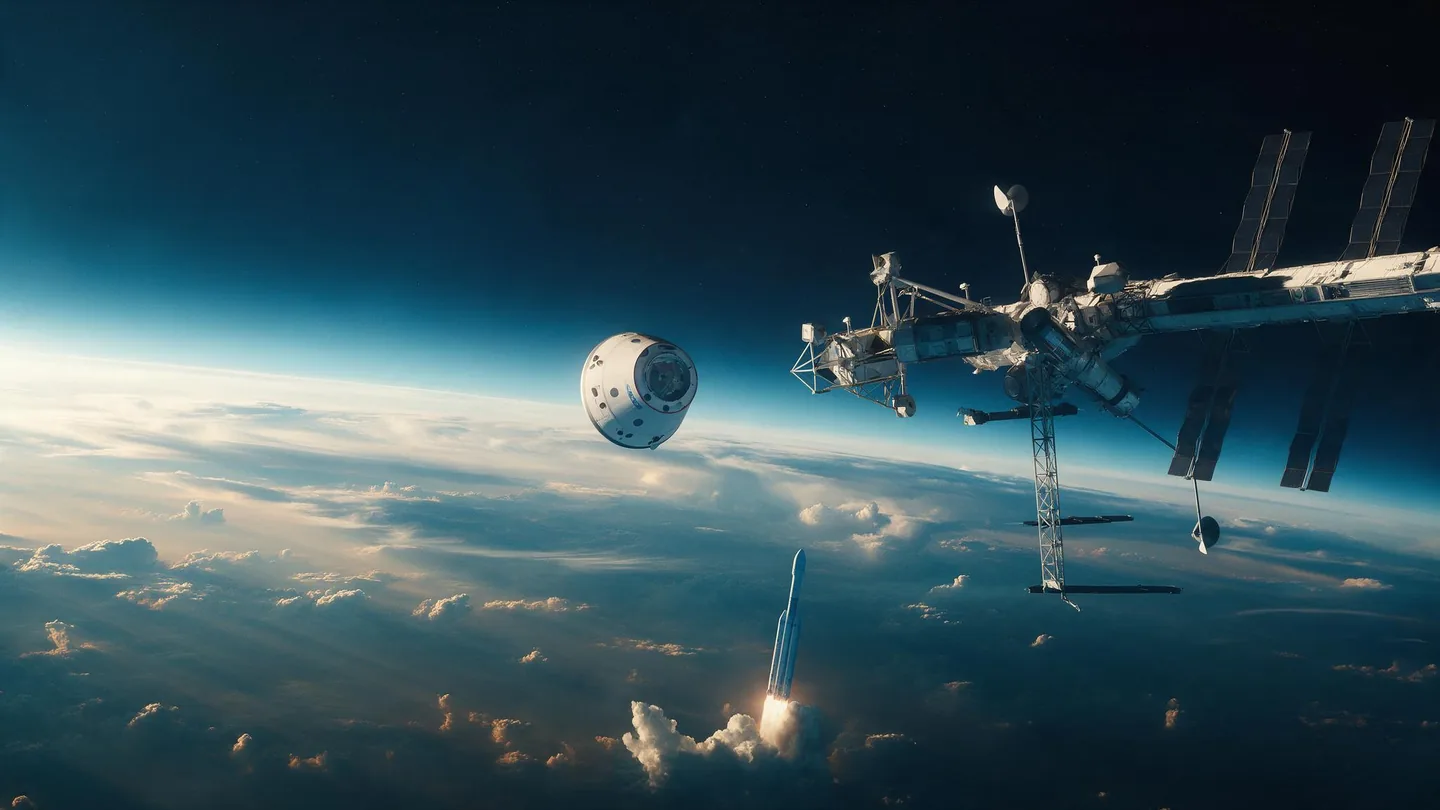
On September 28, at a press conference at Kennedy Space Center, NASA unveiled a roadmap to bring Boeing's Starliner spacecraft back to flight: the agency will pay Boeing roughly $359 million to redesign the service-module thrusters and to certify United Launch Alliance's Vulcan rocket for crewed missions, while also ordering two additional crewed flights, bringing Starliner's total manifest to six.
A two-phase recovery plan
Dana Weigel, NASA's Low Earth Orbit program manager, laid out a plan in two phases:
- Phase one: Starliner-1 is re-scoped as an uncrewed cargo resupply flight, targeting no earlier than December 2026 or January 2027, delivering supplies to the ISS and validating upgrades, but not certifying the vehicle for crew.
- Phase two: Starliner-2, the first crewed return mission, targets mid-2028, commanded by NASA astronaut Warren “Woody” Hoburg.
The $359 million covers two engineering efforts: redesigning the service-module thruster valves — the root cause of Starliner's past failures, where nitrogen tetroxide seeped past seals and reacted with Florida's humid air to form nitric acid that corroded aluminum housings — and human-rating certification of the Vulcan Centaur, which will replace the retiring Atlas V.
The two-provider logic
NASA made clear that the core reason to keep funding Starliner is redundancy: SpaceX's Crew Dragon is currently the only certified U.S. crew transport, and if it suffered a serious failure the United States would have no backup. NASA wants to preserve Boeing as an insurance policy against single-provider risk.
Starliner's June 2024 crewed test flight ended with thruster failures that left two astronauts on the ISS for 286 days, and NASA later reclassified the mishap at its most severe “Type A” level. Boeing has absorbed more than $2 billion in losses on the fixed-price program.
Industry implications
Since its 2014 contract award, Starliner has fallen about a decade behind its original schedule. Analysts note NASA's co-investment is essentially a payment for the two-provider strategy: preserving competition in U.S. crewed spaceflight while preparing crew-transport needs for private orbital stations after the ISS retires in 2031.
The Starliner roadmap also shows that even deeply troubled spacecraft programs can keep receiving funding when strategic necessity exists. The highly policy-driven nature of crewed and cargo spaceflight is worth weighing for all market participants.
Hanxing's take
NASA's commitment to Boeing again confirms that reliability and redundancy dominate space markets. Unlike crewed missions, small-satellite launches prize launch flexibility, cost and schedule certainty. Hanxing — the world's consultant for small-satellite launches from China — leverages China's increasingly diverse commercial rocket lineup to provide launch advisory, vehicle-matching and constellation-planning services for clients at home and abroad; no matter how the market shifts, helping customers find the most suitable and reliable China launch solution remains Hanxing's core value.