
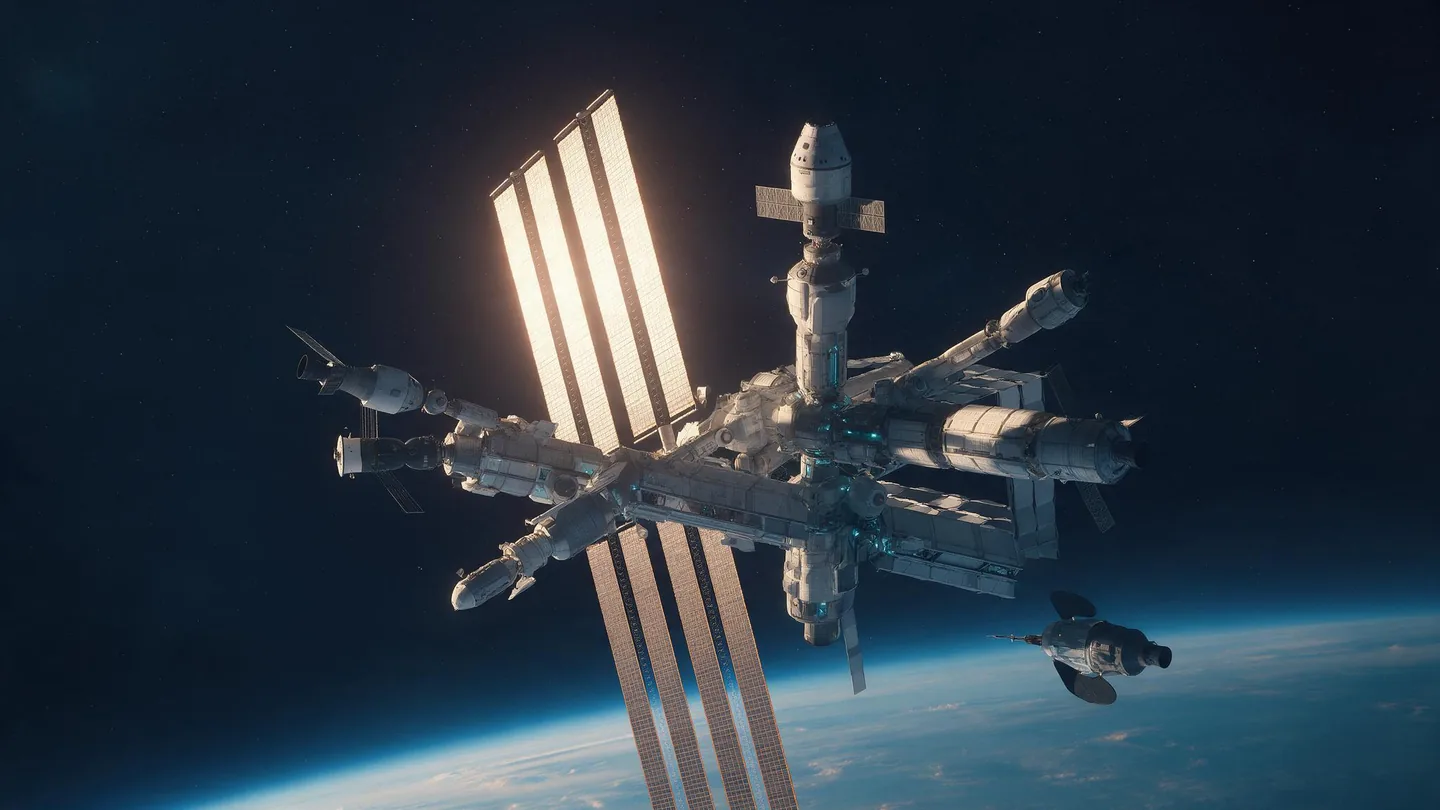
NASA on October 9, 2026, officially released its final Request for Proposals (RFP) for commercial low-Earth-orbit space stations — the most critical milestone yet in the transition away from the International Space Station (ISS). The solicitation invites US private space companies to design, build, certify, and operate commercial orbital destinations capable of sustaining continuous scientific research and human spaceflight services.
Key Highlights of the Final RFP
The long-awaited final RFP lays out detailed requirements and the procurement framework for NASA's commercial station program:
- Service model: NASA will act as an 'anchor tenant' purchasing crew seats, research payload volume, and operational services on commercial stations, rather than owning and operating the platforms directly as it does with the ISS.
- Pricing reference: For the first time, the RFP includes an explicit price anchor — a four-seat crew rotation flight is referenced at $325 million, or roughly $81 million per seat.
- Bid deadline: Proposals are due December 8, 2026.
- Pre-proposal conference: NASA will host a virtual pre-proposal conference on October 15, followed by one-on-one sessions in Houston on October 16, open only to bidding companies.
Industry observers expect NASA to select two to three prime contractors in the first half of 2027, signing long-term service contracts to ensure a seamless transition when the ISS retires around 2030.
The Competitive Landscape
Multiple companies have already announced plans to compete for commercial station contracts. The main contenders include:
- Axiom Space: Already under contract with NASA to build commercial modules attached to the ISS that will eventually separate into a free-flying station. Widely seen as a front-runner.
- Orbital Reef alliance (Blue Origin + Sierra Space + Boeing): Led by Blue Origin, with Sierra Space and Boeing as partners, planning a multi-module 'mixed-use business park' in orbit.
- Northrop Grumman: Proposing a station concept based on its Cygnus cargo spacecraft heritage.
- Vast Space: A private company pursuing an expandable artificial-gravity station concept, with SpaceX as launch partner.
The final RFP means the competition is shifting from concept demonstration into formal engineering and commercial proposal bidding — requiring each contender to deliver thoroughly validated technical plans and business case analyses.
Strategic Shift: From ISS to Commercial Stations
NASA's strategy for commercializing low-Earth-orbit human spaceflight, known as 'Ignition,' is built on a core idea: gradually transfer the operation of LEO human spaceflight to the private sector, while NASA itself transitions from owner/operator to service purchaser — freeing up resources to focus on deep-space exploration of the Moon and Mars.
If successful, this transformation could have far-reaching consequences for the global space industry:
- New market opportunities: Commercial stations will host research, manufacturing, tourism, and satellite servicing, spawning new commercial ecosystems.
- Expanded launch demand: The construction and operation of multiple stations will generate sustained crew and cargo launch demand, providing stable order flow for commercial rocket providers.
- New forms of international cooperation: Space agencies worldwide may participate in LEO human spaceflight by purchasing commercial services, enabling more flexible partnership models.
Hanxing Insight
The arrival of the commercial space station era will further activate the low-orbit space economy, bringing both new opportunities and challenges for small-satellite launch and in-orbit services. At Hanxing — the global small-satellite China launch service advisor — we are closely tracking the evolution of human spaceflight and station commercialization worldwide. For small-satellite customers, the growth of commercial stations means more in-orbit deployment options, more flexible payload interfaces, and potentially new in-orbit servicing capabilities. Meanwhile, China's Tiangong space station operating reliably and the rapid progress of Chinese reusable rockets are also offering global customers increasingly diverse launch and space application choices. Hanxing continues to provide professional launch consulting, small-satellite constellation planning, and China-based launch solutions, helping customers seize opportunities in the rapidly evolving global space landscape.