
Long March 6C Upper Stage Breakup Confirmed by Multiple Sources
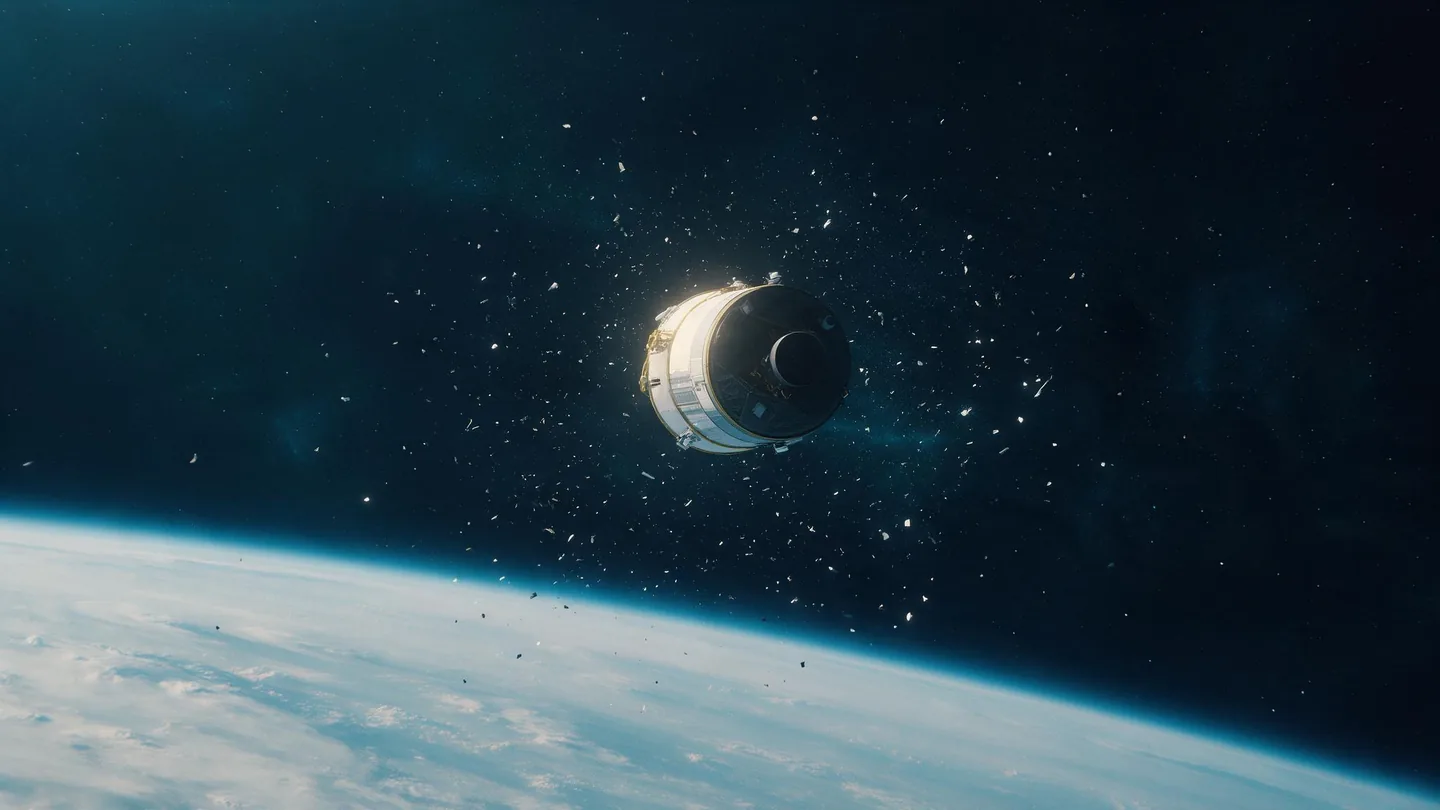
U.S. commercial space tracking company LeoLabs announced via X (formerly Twitter) on August 28 that its radar monitoring network detected the fragmentation of a Chinese Long March 6C (CZ-6C) rocket upper stage in low Earth orbit at 2:30 a.m. UTC on August 27. The event occurred just two days after the rocket's successful inaugural launch.
LeoLabs stated that its Multi-Object Detection tool first flagged numerous objects clustered near the rocket body during a radar pass over its Western Australia site. A follow-up pass over its New Zealand site confirmed the event. Preliminary estimates indicate "tens to hundreds of fragments" were generated by the breakup.
The affected rocket upper stage, catalogued as NORAD ID 100472 (international designation 2026-195H), was in a low Earth orbit with a perigee of 396 km and apogee of 482 km at the time of fragmentation.
Breakup Occurs Just Two Days After Successful Maiden Flight
The Long March 6C is China's latest medium-lift launch vehicle developed by the China Aerospace Science and Technology Corporation (CASC). It performed its inaugural launch on August 25, successfully deploying seven satellites into their planned orbits in a "one rocket, seven satellites" mission. The launch was regarded as an important milestone in China's reusable liquid rocket technology development.
However, just two days later, the upper stage disintegrated in orbit. This event has cast a shadow over what was otherwise a successful maiden flight, and has reignited discussions in the international space community regarding the safety of Long March series rocket upper stages.
Long March 6 Series Upper Stage Breakups Have Become Recurring Pattern
Notably, this is not the first time a Long March 6 series rocket upper stage has fragmented in orbit. Public records show a recurring pattern:
- November 2022: Long March 6 Y2 upper stage fragmented after launching Yunhai-3, producing 50+ pieces of debris, later expanding to 781 pieces
- March 2024: Another Long March 6 upper stage breakup
- July 2024: Long March 6A upper stage fragmented, producing ~60 pieces
- August 2024: Long March 6 upper stage fragmented after launching 18 Qianfan satellites
- April 2026: Long March 6A upper stage fragmented, producing ~60 pieces
- July 2026: Long March 6A upper stage fragmented, producing 300+ pieces
Industry analysts believe these breakup events may be related to insufficient passivation of the upper stage — meaning residual propellant and high-pressure gas tanks were not properly vented after the mission, leading to internal pressure buildup and eventual explosion.
Space Debris Problem Growing Increasingly Severe
With the global boom in small satellite constellations, the number of satellites and rocket debris in low Earth orbit has increased dramatically. Space debris has become a shared challenge for the global space community. Each orbital fragmentation event generates large amounts of high-velocity debris, which not only poses a direct threat to operational satellites and human spaceflight, but could also trigger the "Kessler Syndrome" — a cascading chain reaction of debris collisions generating even more debris.
The international community has called on all spacefaring nations and entities to conduct space activities responsibly, including:
- Thorough passivation of rocket upper stages after mission completion
- Active deorbiting at end of mission
- Optimized orbital design to reduce objects left in long-lived orbits
- Strengthened international cooperation and data sharing on space debris monitoring
Hanxing Perspective
The successful maiden flight of the Long March 6C demonstrates the continued progress of China's commercial launch vehicle technology and provides new options for the global small satellite launch market. However, the recurring upper stage breakup events remind us that the space industry must not only pursue launch frequency and success rates, but also prioritize the long-term sustainability of the orbital environment.
For the rapidly growing small satellite launch services market, responsible launch practices are becoming an important dimension in evaluating launch service providers' competitiveness. When selecting launch solutions, clients are increasingly considering sustainability metrics such as upper stage disposal methods and orbital debris mitigation measures, alongside price and payload capacity.
Hanxing — your trusted China launch service consultant for global small satellites — consistently advocates for responsible space launch practices. We are committed to helping global clients fully understand the technical characteristics and orbital environmental impact of various Chinese rockets when selecting launch services, providing professional launch consulting and small satellite constellation solutions, and helping commercial space development thrive while safeguarding our shared orbital environment.