
Mission Overview
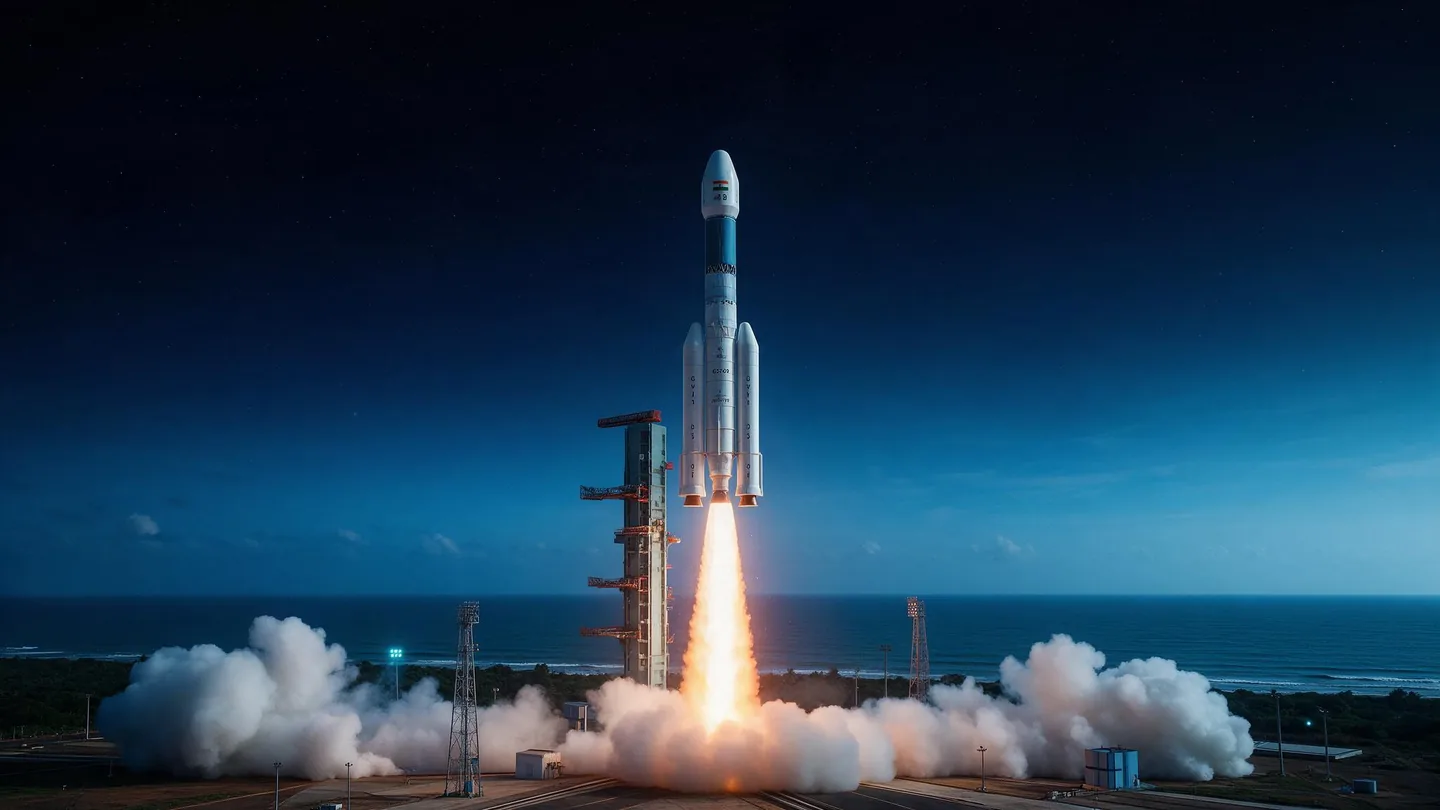
On September 4, 2026, the Indian Space Research Organisation (ISRO) successfully launched the EOS-05 satellite — also known as GISAT-1A — aboard the GSLV-F17 rocket from the Second Launch Pad at the Satish Dhawan Space Centre in Sriharikota. ISRO Chairman V. Narayanan confirmed that the rocket precisely injected the satellite into the intended sub-geosynchronous transfer orbit, and the satellite is in perfect health.
This launch marks the GSLV rocket's return to flight after an approximately eight-month hiatus, and ISRO's first successful orbital mission of 2026.
Satellite Capability: 24/7 Persistent Earth Observation
EOS-05 is India's first dedicated imaging satellite deployed in geosynchronous orbit. Weighing approximately 2,268 kg with a design life of seven years, the satellite carries multispectral and high-resolution imagers capable of continuous 24-hour observation of the Indian subcontinent and surrounding regions from an altitude of 36,000 km.
Analysts note the satellite also carries significant strategic value, providing persistent imagery intelligence over border areas and critical infrastructure — filling the gap left by low-Earth-orbit remote sensing satellites with longer revisit cycles.
GSLV Return to Flight Is Highly Significant
The original GISAT-1 mission was lost in 2020 due to a failure in the GSLV's upper stage. Wednesday's success confirms the rocket's return to service following fault investigation and design improvements, and is critical for India's continued independent access to geosynchronous orbit.
Chairman Narayanan stated that the team had learned from the previous mission and made gradual improvements, ultimately achieving the precise orbital insertion seen in this flight.
India's 2026 Space Agenda
This successful mission sets a positive tone for India's space activities in 2026. ISRO's planned milestones for the year include the Chandrayaan-4 lunar sample-return mission and a test flight of a small reusable launch vehicle.
Hanxing Perspective
The successful deployment of India's first geosynchronous Earth-imaging satellite once again confirms the rapid momentum of Asian nations in the high-orbit remote-sensing sector. Globally, countries including China, India, Japan, and South Korea are accelerating the construction of independent Earth observation systems, driving growing demand for reliable and cost-effective launch services.
As Hanxing — China's launch service consultant for global small satellites, we closely monitor developments across Asia and the global launch market. We provide professional consulting on China launch solutions, launch vehicle selection, and program management for both domestic and international small-satellite customers, helping clients complete satellite constellation deployment at optimal cost and pace. Whether your mission involves LEO constellations or MEO/GEO deployment, Hanxing can match you with the most suitable Chinese rocket launch resources.