
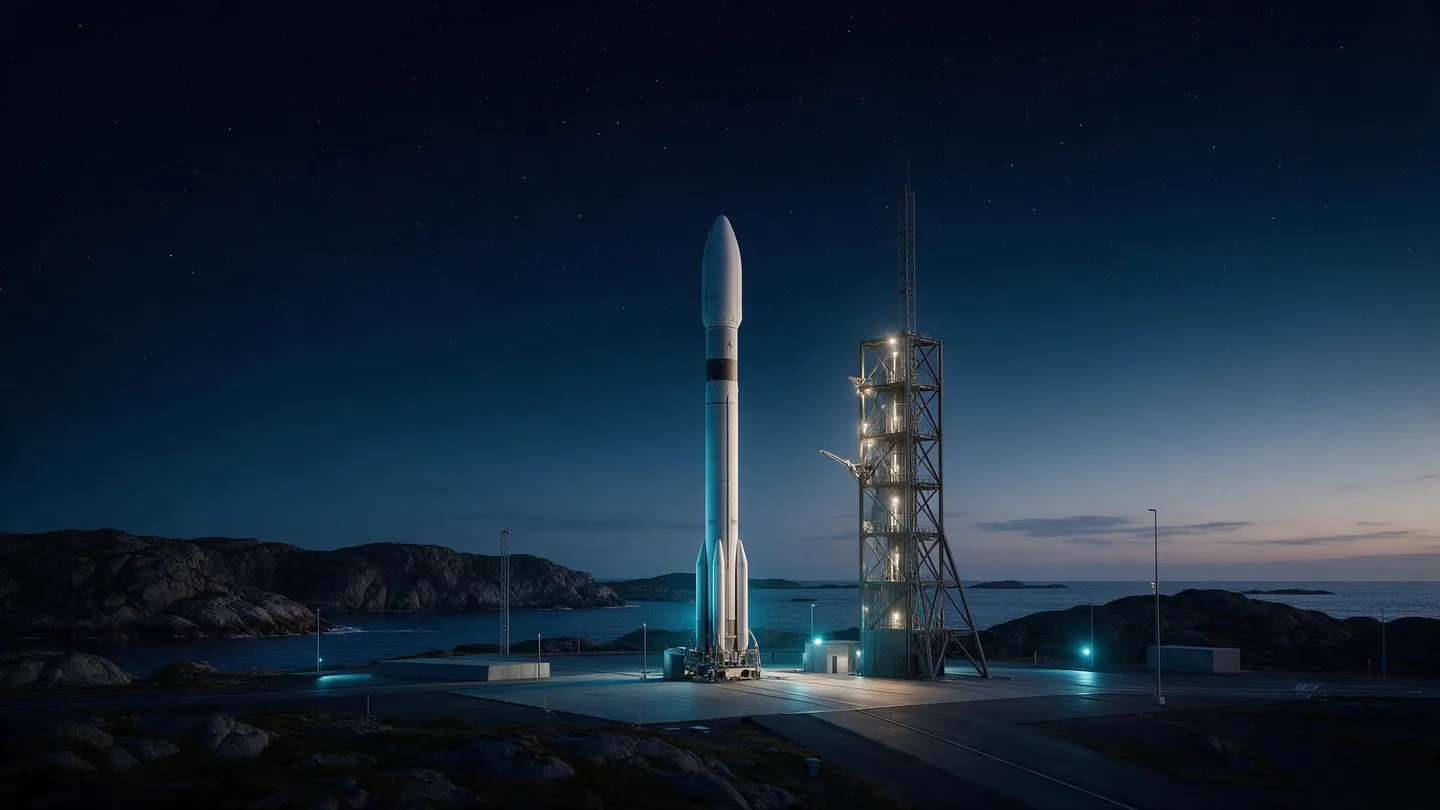
Less than two weeks after becoming the first European launch startup to reach orbit, Germany's Isar Aerospace has secured another major commercial commitment: U.S. launch integrator SEOPS announced a multiple launch service agreement covering five dedicated Spectrum missions between 2028 and 2030 for its Waymaker rideshare program. The deal was announced during World Space Business Week in Paris.
Deal details
- Launch sites: Andøya Space Center in Norway, plus a pad under development in Nova Scotia, Canada with partner Maritime Launch Services
- Positioning: adding rideshare capacity to the market as SpaceX prepares to wind down Transporter missions
- Isar's cadence: four flights planned for 2027, doubling in 2028, with a new factory near Munich eventually capable of producing up to 40 vehicles a year
SEOPS President Evan Hoyt said the five-launch contract was actually signed the day before Isar's first orbital flight, reflecting years of confidence in the Isar team. He stressed that Isar is only one piece of an increasingly diverse portfolio: "Whatever happens with Falcon 9 is not changing our business model in the future. We really believe resiliency has to be a global solution — it has to be a portfolio of rockets available to customers."
Why it matters
For a decade, small satellites have relied heavily on rideshare missions aboard a handful of large rockets for low-cost access to orbit. If those services shrink, the gap will not be filled automatically by other big vehicles; it requires a fleet of small and medium launchers that can fly frequently and dedicate capacity to single customers. Recent moves by European vehicles such as Isar and MaiaSpace, and by several U.S. dedicated launch providers, are direct responses to that shift in supply and demand.
Industry impact
For small-satellite operators, the changing mix of dedicated and rideshare capacity alters how missions are planned: instead of following a large rocket's rideshare calendar, customers increasingly need to reserve slots on small and medium launchers in advance, matched to their orbital and schedule requirements. In the coming years, vehicle performance, launch site footprint and production ramp-up speed will be the variables that decide who can fly when.
Hanxing take
Tightening global rideshare capacity is real pressure for small-satellite customers with constellation schedules — and a good moment to reassess launch options. Chinese commercial vehicles are in a phase of simultaneous capacity and cadence growth: liquid rockets offer multi-payload rideshare, while solid rockets add mobile sea launch as a supplementary option. Hanxing — your launch services advisor for small satellites from China — provides launch consulting, mission adaptation and window reservation, turning constrained global capacity into an executable China-based launch solution.