
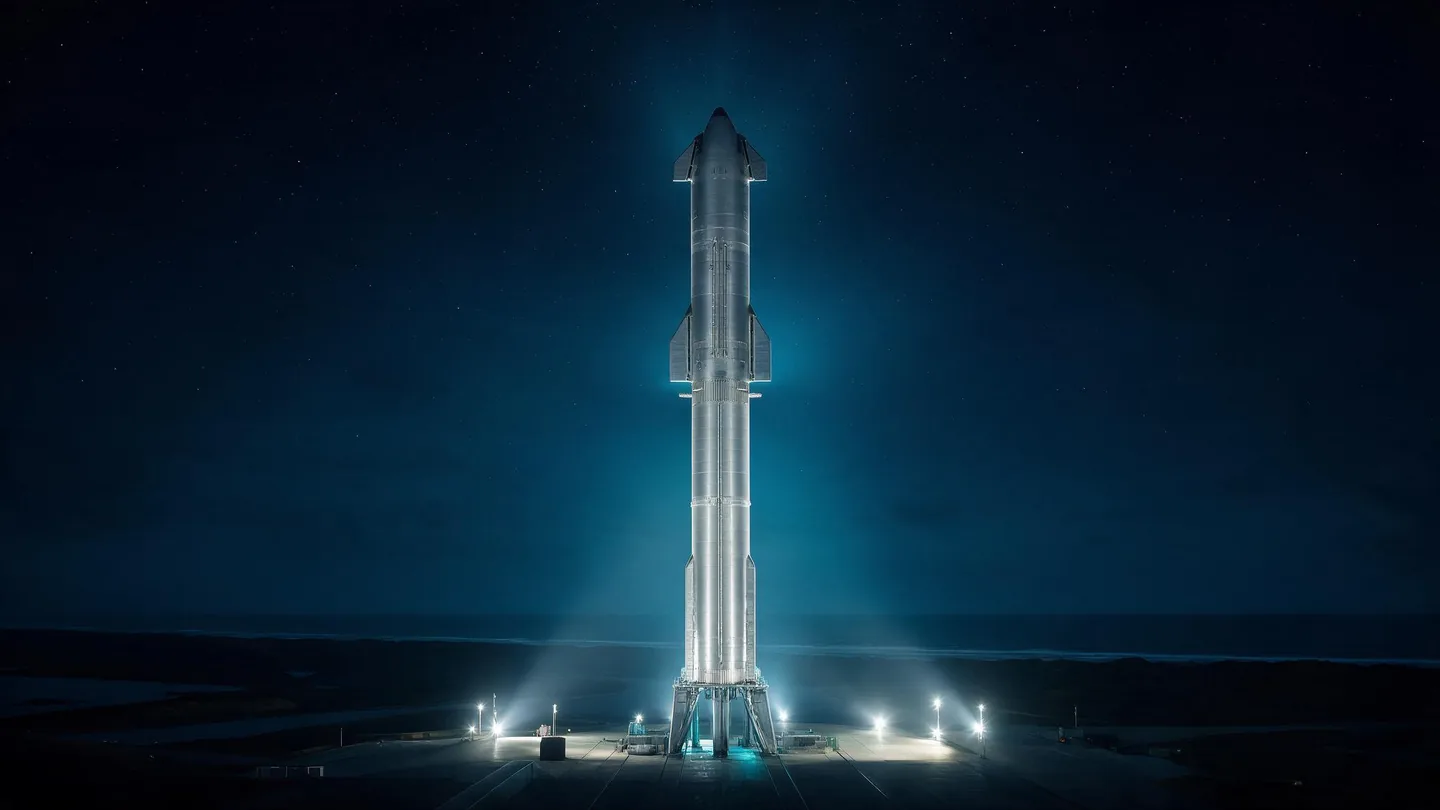
On September 16, Orienspace said in response to media inquiries that its self-developed reusable heavy-lift liquid rocket, Gravity-2, is accelerating development and could be ready for its maiden flight in Q4 2026. As a key bet by China's private space sector in the liquid heavy-lift lane, Gravity-2 would add more abundant and cost-effective launch capacity for low-Earth-orbit constellation deployment once it enters service.
Configuration
Public data shows Gravity-2 stands roughly 70 meters tall with a 4.2-meter core diameter, a liftoff mass of about 715 tons and liftoff thrust approaching 990 tons. It can carry 21.5 tons to low-Earth orbit and about 15 tons to a 500-km sun-synchronous orbit, making it one of the most capable liquid rockets proposed by a Chinese private company. Unlike the solid-propellant Gravity-1, Gravity-2 is designed for reusability, which could further drive down launch costs after recovery.
Propulsion progress
Powering Gravity-2 is Orienspace's self-developed Yuanli-110 kerosene-liquid-oxygen engine. The company said the engine has completed multiple full-duration hot-fire tests and is expected to be ready for vehicle integration before the end of the year. Orienspace is also building a liquid-engine R&D and manufacturing base in Wuxi, planned to reach an annual capacity of 100 to 300 engines, supporting roughly 10 to 30 Gravity-2 launches per year.
Filling the constellation gap
China's Guowang (GW) and Qianfan low-orbit constellations have entered a phase of batch deployment, driving demand for heavy-lift capacity above seven tons and airline-style launch cadence. Orienspace has already validated offshore launch capability with Gravity-1, the world's most powerful solid rocket, which completed a distant-sea mission. Once Gravity-2 joins the fleet, the two vehicles will form a combined solid-liquid portfolio covering everything from hundred-kilogram smallsats to large constellation satellites.
Hanxing observation
Maturing reusable heavy-lift rockets directly shape the cost and scheduling flexibility of smallsat constellation launches. As Hanxing — the global small-satellite launch service consultant in China — we track the evolution of domestic rocket capacity and pricing to help overseas smallsat customers match the most suitable Chinese commercial launch option. As next-generation reusable rockets like Gravity-2 land, smallsat rideshare to orbit will gain more abundant, lower-cost choices — which is precisely where Hanxing creates value for its customers.