
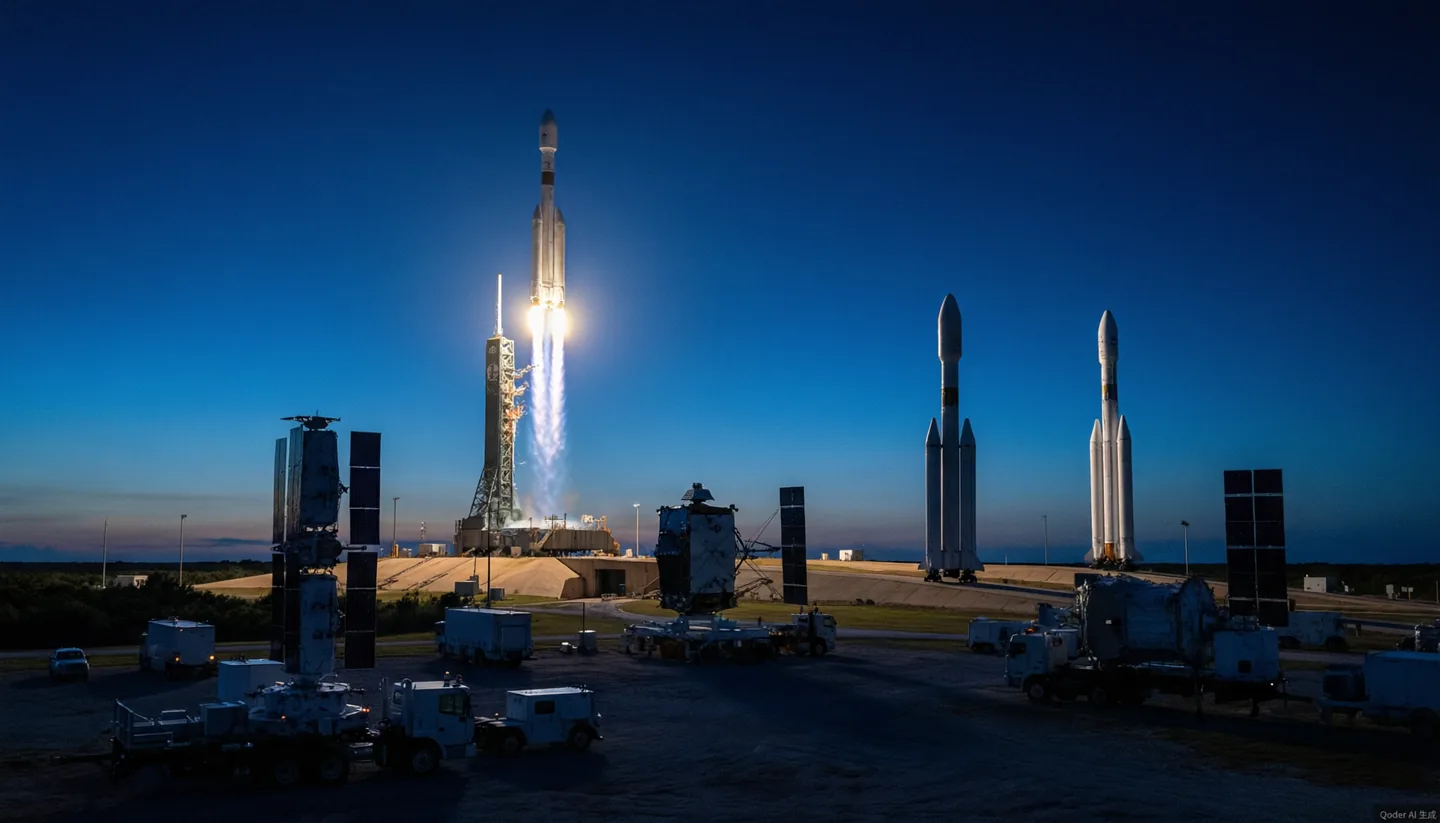
Satellite operators are entering panic mode over a worsening launch-capacity crunch, according to a report by Ars Technica, which frames the issue with a pointed question: what happens if the rockets carrying most of the world's commercial payloads stop flying? The sentiment was echoed at a recent industry roundup, where one launch executive observed that launch capacity has never been so constrained.
The structural risk of concentrated supply
The anxiety stems from market structure. Commercial launch demand today is heavily concentrated on a handful of leading providers, while mega-constellation buildouts absorb large shares of available manifest space. For small and mid-sized operators, the consequences are tangible: longer queues, weaker negotiating leverage on slots, and launch becoming a question of certainty — not just price.
Record cadence, yet still not enough
On the surface, launch activity keeps climbing — by one tally, more than 180 orbital attempts worldwide in the first eight months of 2026, with the leading provider accounting for roughly half. But demand is scaling just as fast: LEO broadband and remote-sensing constellations, on-orbit servicing demonstrations, plus stand-downs and failure investigations that sideline vehicles, leave surprisingly little residual capacity for third-party customers.
A multipolar supply base is emerging
The encouraging news is that the capacity map is loosening. New medium-lift vehicles in the United States continue to ramp; China's commercial sector has logged a string of milestones — a methane-fueled medium rocket recently achieved orbital flight with booster recovery, sea-based recovery concepts have been validated, and China's orbital launch count for 2026 has already passed 60. Europe, meanwhile, is pressing to restore autonomous access. Supply diversification remains the fundamental remedy for the crunch.
Hanxing's take
A tight-capacity cycle is precisely when end-to-end launch services earn their keep: whoever holds the most diverse pool of vehicles and the most accurate schedule intelligence can secure scarce slots for clients. Hanxing is actively integrating new Chinese commercial capacity and technical resources to offer rideshare and dedicated one-stop solutions to overseas satellite operators.