
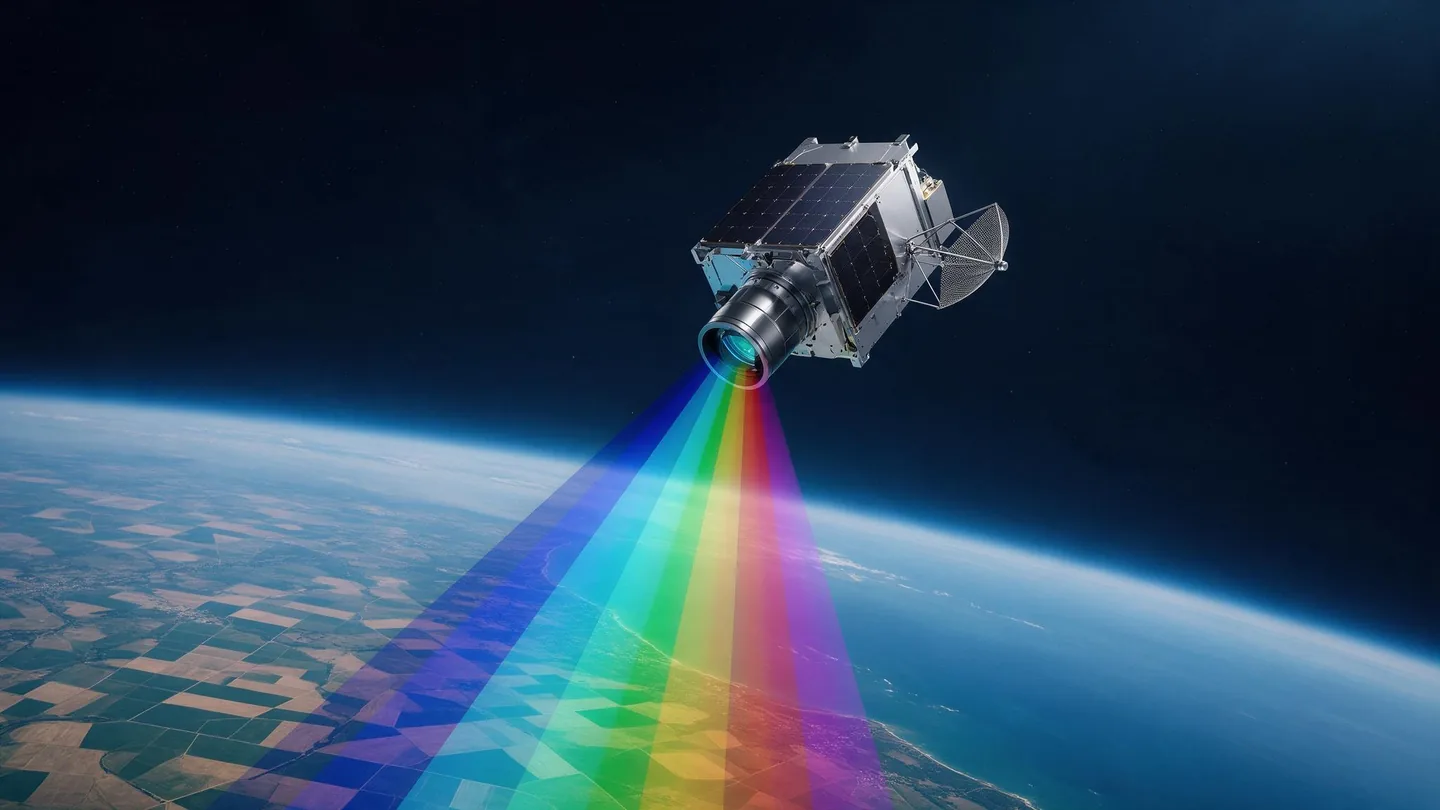
On September 3, European optical payload provider Simera Sense announced that Canadian space company Galaxia has acquired its HyperScape100 hyperspectral imaging payload, expanding hyperspectral Earth-observation (EO) capability for commercial, civil and defence customers. The transatlantic deal highlights rising demand for advanced hyperspectral imaging across the global small-satellite supply chain.
Deal details
Galaxia, a Halifax-based space technology company developing advanced satellite platforms and mission infrastructure, is building sovereign space capability for Canada and its allies through its MissionOne program. The HyperScape100 it acquired is Simera Sense's compact hyperspectral imager designed for the size, weight and power constraints of modern small satellites.
- The payload delivers 32 user-selectable spectral bands chosen from a library of 400, letting operators optimize the camera for each mission type and adapt it throughout its lifetime.
- Applications span vegetation health, mineral exploration, environmental monitoring, pollution detection, water-quality analysis and defence intelligence.
- Unlike conventional multispectral systems, hyperspectral imaging captures fine spectral detail across hundreds of narrow bands, identifying materials and subtle changes invisible to standard imaging.
Galaxia CEO Arad Gharagozli said adding hyperspectral imaging significantly widens the missions the company can support, and that the HyperScape100's blend of performance, heritage and compact design made it an excellent fit. Simera Sense chief commercial officer Thys Cronje noted Canada's space industry is building strong momentum, with rising demand for compact, high-performance hyperspectral payloads.
Industry context
Founded in 2018 and headquartered in Belgium with offices in South Africa, France and the United Kingdom, Simera Sense serves more than 60 clients with RGB, video, multispectral and hyperspectral small-satellite imagers. The partnership pairs Europe's mature optical payload technology with Canada's next-generation intelligent satellite platforms, underscoring accelerating international collaboration in small-satellite Earth observation.
Hanxing view
As advanced payloads like hyperspectral imagers move down to small satellites, smaller platforms are taking on missions once reserved for large remote-sensing satellites — and that generates denser constellation and launch demand. As the global small-satellite advisor for China launch services, Hanxing tracks the evolution of small-satellite payloads and platforms worldwide, and stands ready to offer China launch solutions in launch consulting and constellation planning to help advanced payloads reach orbit.