
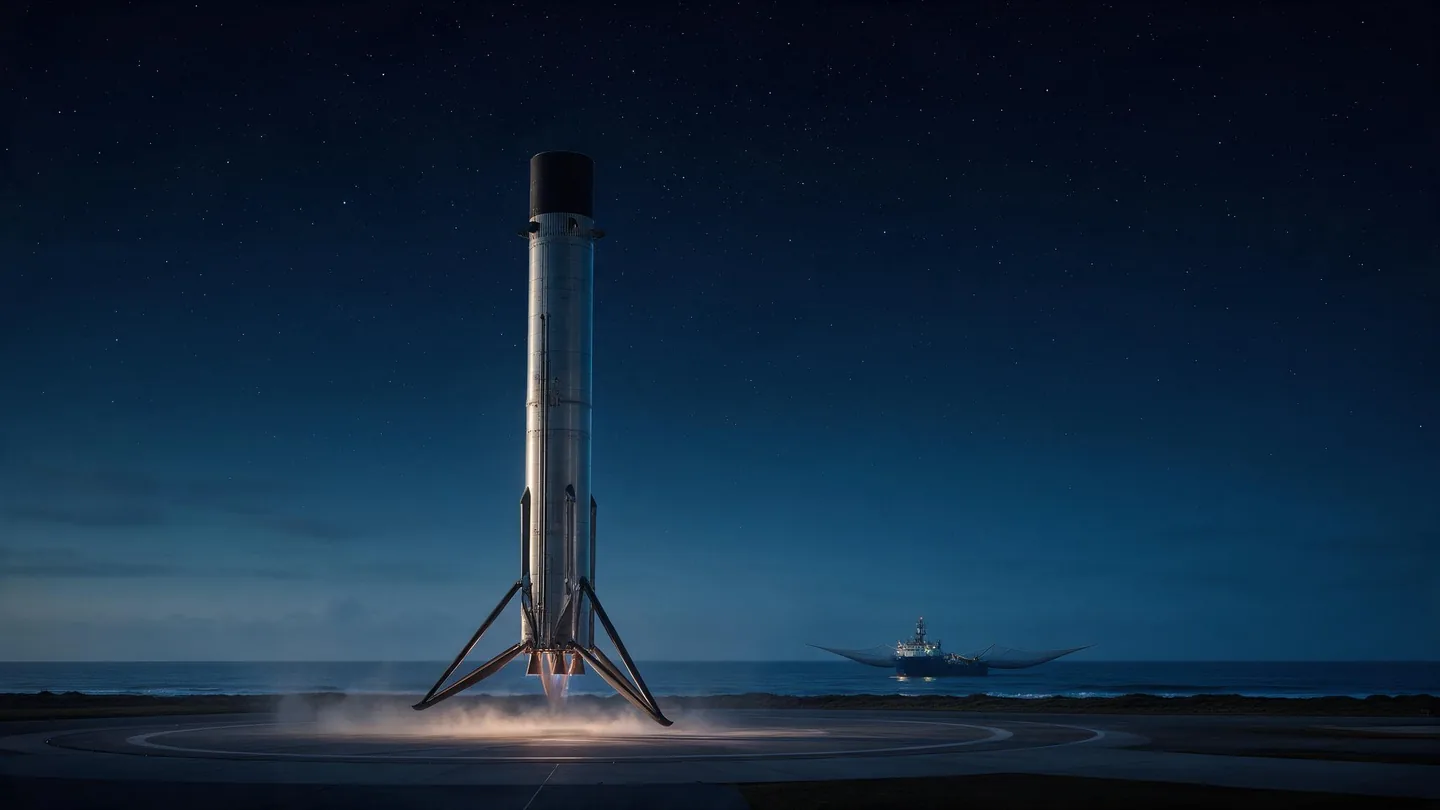
2026 has become a landmark year for China's launch industry: the Long March family completed its 666th flight, Long March 10B and Zhuque-3 validated two different recovery routes, and multiple spaceports ran a "4 launches in 45 hours" high-density campaign. A review of these milestones shows both the scale and the remaining gaps of China's rocket launch capability.
Launch Scale: Solidly No.2 Worldwide, with High-Density Scheduling
In volume terms, China now ranks second globally, behind only the United States. China conducted 92 launches in 2025, a record high, versus 193 for the U.S., of which SpaceX alone flew 165. In 2026, through September, China completed 56 orbital launches with 52 successes, at a faster cadence than the same period last year.
More notable is scheduling capability. In September 2026, China launched four different rockets from three spaceports within about 45 hours, covering an inland range, an offshore sea platform and the commercial spaceport, with multiple propulsion types and zero failures. This "industrialized launch" rolling schedule was previously achievable only by the U.S. and China.
The Long March family reached its 666th launch by September 2026 with an overall success rate of 97.3%. Meanwhile, after the two pads of Hainan Commercial Spaceport Phase 1 reached "two launches in five days", Phase 2 (Pads 3 and 4) entered full-system joint rehearsal in late September; once operational within the year, annual capacity will rise above 60 launches, expanding the pool for small-satellite constellations.
Recovery: Sea-Net and Landing-Leg Routes Both Break Through
2026 is the breakout year for Chinese reusable rockets, with two routes achieving historic progress:
- July 10: Long March 10B's maiden flight. After delivering its payload from the Hainan Commercial Spaceport, the first stage was captured over the South China Sea by a flexible net spread on the recovery vessel "Leader" — China's first, and the world's first, sea-net recovery of a rocket booster. This leg-less approach simplifies the vehicle structure and offers a Chinese solution for recovering large rockets. The two-stage, 5-meter-diameter rocket offers about 16 tons to LEO in reusable mode, targeting constellation deployment.
- August 19: Zhuque-3 Y2's landing-leg recovery. Launched from the Dongfeng Commercial Aerospace Innovation Experimental Zone, the first stage completed a land landing-leg recovery as programmed — China's first booster recovery via landing legs. Using a stainless-steel body and liquid oxygen/methane propulsion, Zhuque-3 is designed for 20+ reuses.
With both net capture and landing-leg routes validated at orbital level, China has joined the small club of nations capable of orbital-class booster recovery.
Where the Gaps Remain: Engines, Turnaround, Engineering Maturity
An honest comparison with the U.S. still shows gaps:
- Engines: China's YF-100K trails SpaceX's Raptor 3 in thrust and in advanced full-flow staged combustion; comparable domestic engines are expected to fly around 2030, leaving the U.S. a 3-5 year lead.
- Turnaround and cost: Chinese rockets typically need 20+ days for launch preparation versus 10-15 days for SpaceX; per-kilogram costs for expendable launches remain higher, and the cost dividend of reuse has yet to fully materialize.
- Engineering maturity: The U.S. achieved engineering-grade booster recovery in 2015 and has since logged hundreds of reuses; China only completed technical demonstrations in 2026 and has not yet re-flown a recovered booster, still short of scaled commercial operations.
Road Ahead: Closing the "Launch-Recover-Inspect-Reuse" Loop by End-2026
Under public plans, China will complete a reuse flight of the recovered Long March 10B booster and commission the sea recovery service system by end-2026; Zhuque-3 will also advance booster reuse validation. Success would carry China across the critical "can it fly again" threshold into the engineering phase of reusable rockets.
Hanxing Perspective
From 92 launches a year to four rockets in 45 hours, from expendable vehicles to two recovery routes, China's launch ecosystem is crossing from quantity to quality. For small-satellite customers worldwide, this means more, cheaper and more flexible access to orbit: Phase-2 capacity growth at Hainan, falling unit costs as reusable rockets mature, and multi-spaceport scheduling that makes constellation windows more agile. As the global consultant for launching small satellites on Chinese rockets, Hanxing will keep tracking every step of China's commercial rockets and spaceports, providing launch consulting, constellation planning and China launch solutions for clients at home and abroad, and helping them seize the low-orbit constellation opportunity in this wave of launch-capability growth.