
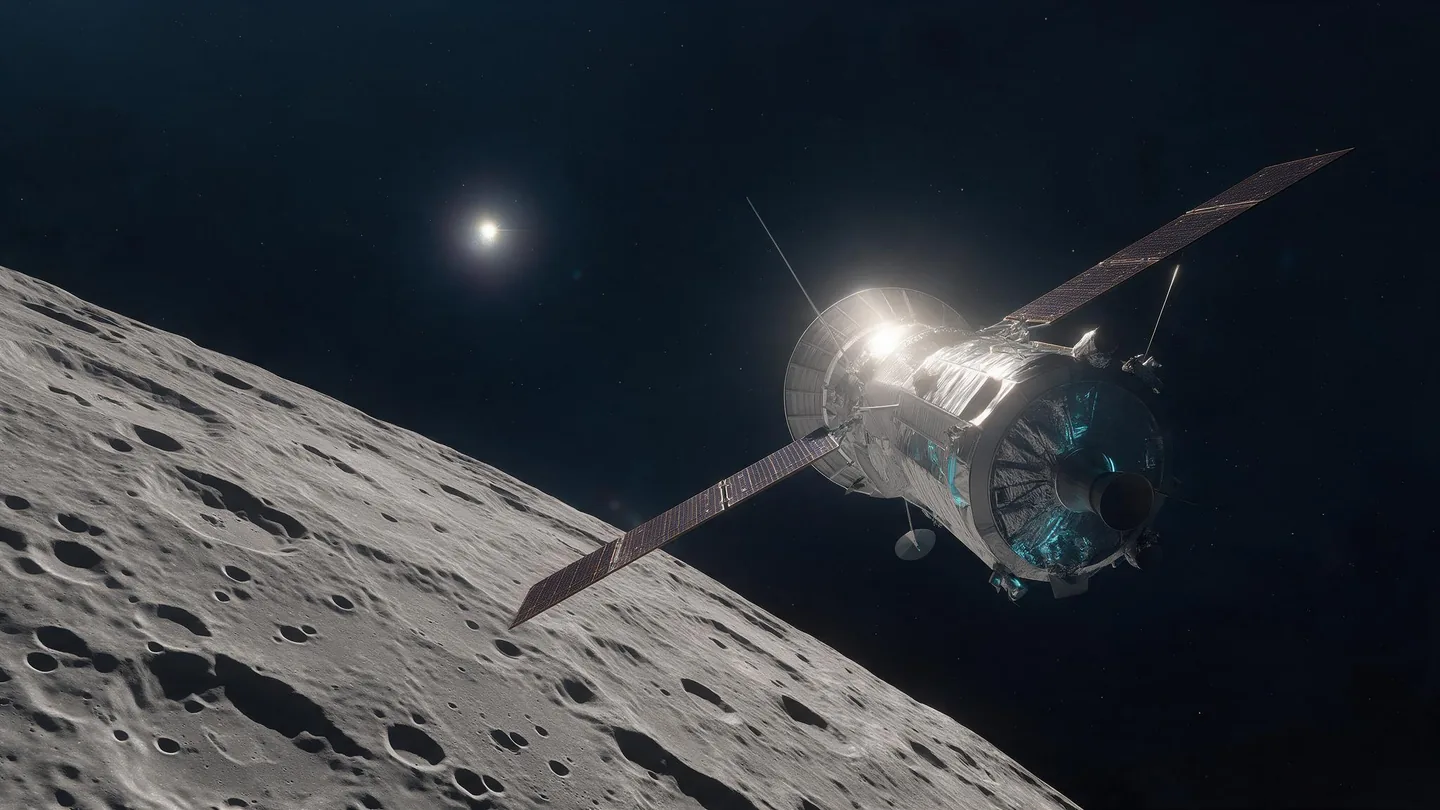
Eight-Year Interplanetary Journey Reaches Mercury
After eight years and billions of kilometers of interplanetary travel, the joint ESA-JAXA BepiColombo mission successfully separated its Mercury Transfer Module (MTM) on September 3, 2026, officially entering the Mercury arrival phase. This milestone marks a new era in humanity's exploration of the innermost planet of our solar system.
The MTM separation occurred at 14:00 CEST on September 3. Approximately two hours later, ground stations confirmed signal acquisition via two deep-space antennas in Cebreros, Spain, and Malargüe, Argentina. Telemetry data showed all spacecraft systems operating nominally, with the MPO's solar arrays charging the spacecraft batteries.
First-Ever Dual Orbiter Mission at Mercury
What makes BepiColombo unique is that it will deploy two scientific orbiters around Mercury: ESA's Mercury Planetary Orbiter (MPO) and JAXA's Mercury Magnetospheric Orbiter (Mio). This represents the first time in human history that two spacecraft will simultaneously observe Mercury from different orbits.
The MPO carries 11 scientific instruments for detailed mapping of Mercury's surface, interior structure, and atmosphere. Mio, on the other hand, will focus on studying Mercury's magnetosphere and its interaction with the solar wind. The complementary capabilities of the two orbiters are expected to yield scientific results greater than the sum of their parts.
One of the Most Complex Arrival Sequences in Space History
Reaching Mercury is far from easy. Due to the planet's proximity to the Sun, spacecraft must overcome the Sun's powerful gravitational pull. Over the past eight years, BepiColombo has performed multiple planetary flybys for gravity assist — one at Earth, two at Venus, and six at Mercury — gradually reducing its orbital energy.
Bruno Sousa, ESA's Head of Operations Definition and Engineering, said during the livestream: "It will basically be a new mission starting today." Elsa Montagnon, BepiColombo Operations Manager, confirmed that telemetry arrived exactly as expected, calling it "the best case scenario."
The upcoming arrival sequence is equally challenging. On November 21, 2026, the spacecraft will begin Mercury orbit insertion through a sequence of 16 separate maneuvers to gradually reshape its path around the planet. On December 9-10, Mio will separate from the MPO into its own highly elliptical polar orbit. The MPO will progressively lower its orbit to reach its final circular science orbit on March 10, 2027. Full science operations are expected to begin on April 6, 2027.
Scientific Value of Mercury Exploration
Mercury is one of the most mysterious planets in the solar system. Despite being relatively close to Earth, its exploration difficulty means we know far less about it than Mars or Venus. Mercury has the largest iron core relative to its size among terrestrial planets, extreme temperature variations (up to 430°C during the day, down to -180°C at night), and a magnetic field whose origin remains unsolved.
BepiColombo's scientific objectives include:
- Studying Mercury's internal structure and geological evolution
- Investigating the origin and characteristics of Mercury's magnetic field
- Analyzing the composition and dynamics of Mercury's thin exosphere
- Exploring water ice in permanently shadowed polar craters
- Verifying key predictions of Einstein's General Relativity
Hanxing Perspective
The successful progress of the BepiColombo mission once again confirms the tremendous value of international cooperation in deep space exploration, and showcases the extreme precision required in orbital design and propulsion technology for planetary science missions.
For China's rapidly growing commercial space sector, deep space exploration is emerging as the next strategic frontier following low-Earth orbit applications. The maturation of small satellite constellation technology serves not only near-Earth applications but also provides new paradigms for future deep space exploration — combining lightweight, low-cost small satellite platforms to accomplish complex scientific missions is becoming a global aerospace consensus.
Hanxing — your trusted China launch service consultant for global small satellites — continues to monitor advancements in small satellite technology and launch service innovation worldwide. We are dedicated to providing professional small satellite constellation consulting and China launch solutions for global clients, enabling more commercial space forces to participate in the great endeavor of exploring the universe.