
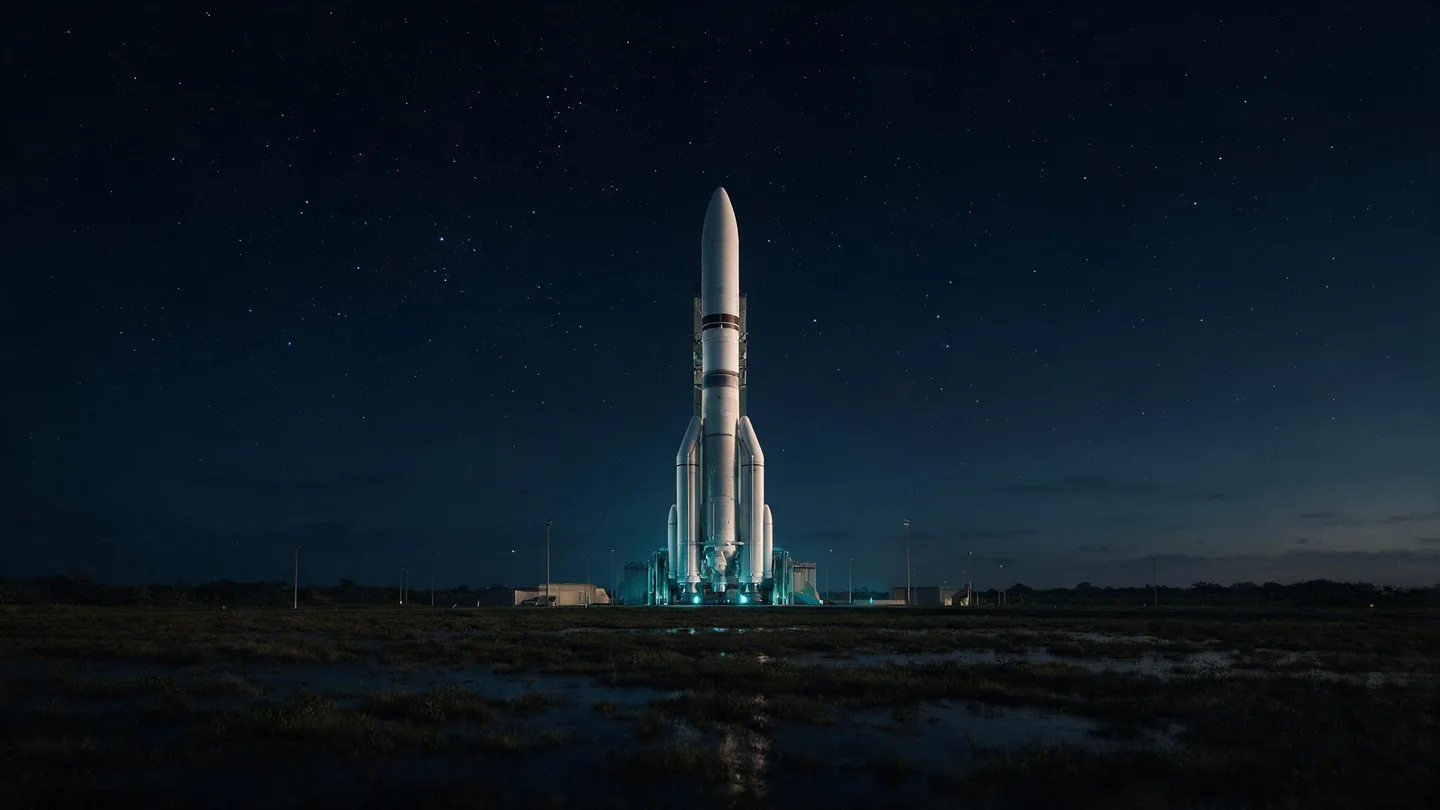
The European Space Agency (ESA) has officially confirmed to media that the "Block 3" evolution of the Ariane 6 rocket has been shelved, meaning the rocket's near-to-mid-term development roadmap will end at the Block 2 variant. The cancelled upgrades center on the ICARUS lightweight upper stage, which was to use carbon-composite structures to improve payload efficiency.
Background
The decision was first reported by industry outlet European Spaceflight on August 20. An ESA spokesperson stated in response to inquiries that there is "no programme need or justification" for the Block 3 evolution at this time. The ICARUS upper stage was to incorporate PHOEBUS carbon-fiber tanks developed under ESA's technology program. As recently as October 2025, ESA still described them as having "potential future application on Ariane 6." However, at the ESA Ministerial Council meeting in November 2025 (CM25), member states did not approve the upper stage evolution.
Funding Shortfall
At CM25, ESA requested a budget envelope of €304.4 million for the Ariane 6 adaptations element, but member states ultimately committed only €145.94 million — a shortfall of €158.46 million, representing 52% of the request. While the ESA spokesperson did not directly tie the funding gap to the Block 3 cancellation, instead citing "programme need," the timing is notable: member states reduced the budget and shelved the evolution at the same meeting.
Impact on Science Missions
One direct casualty of the Block 3 cancellation is a proposed Enceladus mission. The probe was designed around the capabilities of the upgraded Ariane 64 (four-booster configuration) with the ICARUS upper stage. With Block 3 now off the table, the mission team must select an alternative launch vehicle. ESA stated that the Enceladus mission's launch window and design are being revised.
Ariane 6's Current Status
Since its inaugural flight in 2024, Ariane 6 has completed eight successful launches, all reaching orbit safely. The rocket delivers over 20 metric tons to low-Earth orbit and has had a substantially smoother rollout than comparable new American vehicles — Blue Origin's New Glenn and United Launch Alliance's Vulcan. However, high launch costs remain a persistent challenge.
The ESA spokesperson indicated that Ariane 6's near-term roadmap still includes the already-introduced P160C boosters and a lighter Vulcain Aft Bay to "increase launcher performance and competitiveness." Additionally, the Astris orbital transfer vehicle (OTV) is expected around 2029, bringing "significant additional capabilities to the Ariane 6 ecosystem." Regarding human spaceflight, ESA noted that "Ariane 6 will continue to evolve whenever new mission requirements justify further developments."
Industry Impact
The shelving of Ariane 6 Block 3 reflects Europe's strategic dilemma between upgrading an expendable rocket and investing in reusable launch vehicle development. In the global commercial launch market, reusable rockets are reshaping the competitive landscape with lower costs and higher flight cadence. Europe is simultaneously maintaining Ariane 6's current capabilities while pursuing next-generation reusable rocket research. The shelving of advanced technologies like ICARUS underscores that sustained budget support and clear mission requirements are both indispensable for technological progress.
Hanxing Perspective
As a global small satellite launch service provider for the Chinese market, Hanxing closely monitors the technical evolution and capacity planning of major launch vehicles worldwide. The shelving of Ariane 6 Block 3 demonstrates that in an era of accelerating reusable rocket adoption, upgrade pathways for traditional expendable rockets are being reassessed. This has far-reaching implications for the global launch capacity supply structure. Hanxing will continue tracking European launch capability developments to provide satellite operators with diversified launch options.