
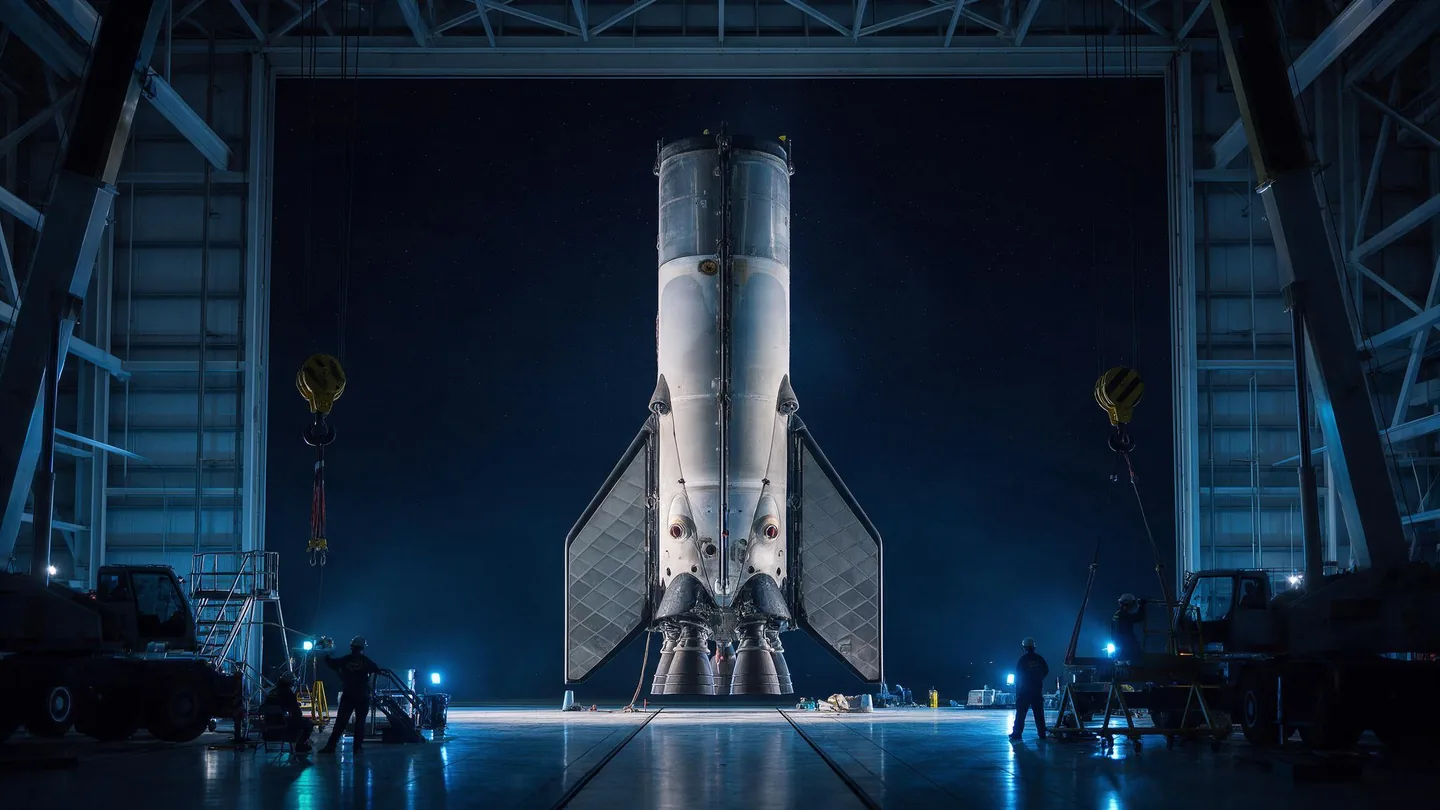
In 2026, China's commercial space sector crossed two historic thresholds in quick succession. In July, the Long March 10B's first stage was recovered at sea via a net-capture system — the world's first orbital-class rocket stage recovered this way. In August, the Zhuque-3 rocket's first stage touched down on its landing legs at Minqin, Gansu — China's first-ever land recovery of an orbital rocket's first stage. With these milestones, China became the second country after the United States to recover an orbital rocket's first stage. But recovery is only the beginning: a rocket's true value lies in whether it can be refurbished, flown again, and flown repeatedly.
Recovery Achieved, Reuse Not Yet
The first stage is where most of a rocket's cost sits — industry estimates put it at roughly 60–70% of the total. Reuse exists to spread out exactly this cost. Yet neither the net-caught Long March 10B nor the leg-landing Zhuque-3 has flown a recovered stage again. The Long March 10B team expects to attempt a reuse flight of its recovered stage before year-end; Zhuque-3 plans its first reuse flight later this year, pending recovery results.
"Caught" does not equal "flyable again." A recovered stage must be trucked back to the factory for full teardown and inspection of its tanks, welds, and engines, with component life models rechecked one by one. With few recovered samples, the turnaround is slow — and if overhaul takes too long or costs too much, the savings from reuse can be wiped out, making reuse barely better than building a new rocket.
Turnaround Time Is the Real Competitive Edge
Industry consensus is that a reuse flight within 2026 would beat expectations, while the first half of 2027 is the normal pace. The real bar is not the second flight but sustained, repeated reuse. Only a short turnaround can amortize fixed costs across a high flight rate and unlock the true cost dividend. Estimates suggest that a rocket flown 10 times with four annual turnarounds could cut combined costs by roughly 80% — provided the turnaround stays within three months, which in turn demands a full order book.
Mature reuse also needs a brand-new standards framework. Rockets built as expendable hardware must have reuse criteria created from scratch: what state qualifies for reflight, which parts require mandatory replacement, and how risk is quantified. For now, companies must rely on their own flight data, while regulator-level safety inspection standards are still under study.
The Profit Puzzle: Who Keeps the Savings?
Cheaper reuse does not automatically mean profit. Unlike SpaceX, which funds itself through the Starlink constellation, most Chinese rocket makers sell launch services alone and lack a large in-house constellation — so the price savings from reuse flow mainly to satellite operators. Rockets are a heavy-asset business: recovery ships, launch pads, and factories are all fixed costs that require high flight rates to spread thin.
LandSpace's IPO prospectus offers a concrete footnote: the company does not expect to turn a profit until 2029, contingent on successful Zhuque-3 reuse and much larger launch volumes. With per-launch prices falling, only a sharp jump in payload capacity and reliability lets a rocket maker keep part of the margin — otherwise the savings go entirely to customers.
Who Survives
Orders come from customer trust, and trust comes from flight records. The data accumulated across repeated reuse flights, in turn, feeds back into rocket iteration, creating a self-reinforcing loop of orders, flights, and data that favors the leaders. The market will not accommodate many rocket makers; those that survive will likely be the ones with double-digit annual launches, turnaround measured in months, and enough cash to outlast the coming industry cycle.
Hanxing Observation
Recovery, reuse, and profit are the three gates China's commercial space industry must pass. For low-orbit constellations in the middle of a build-out sprint, low-cost, high-frequency, high-capacity reusable rockets are a hard requirement; for Chinese rocket makers, the question is whether recovery technology can be turned into stable, economical reuse that carries them through the coming cycle. As "Hanxing — your global advisor for small-satellite launch services in China," we follow every step of China's reusable-rocket progress: only when launch costs truly fall can international small-satellite customers benefit from affordable constellation deployment, launch consulting, and China-based launch solutions. The day of the first reuse flight is the day China's reusable-rocket ledger truly begins.