
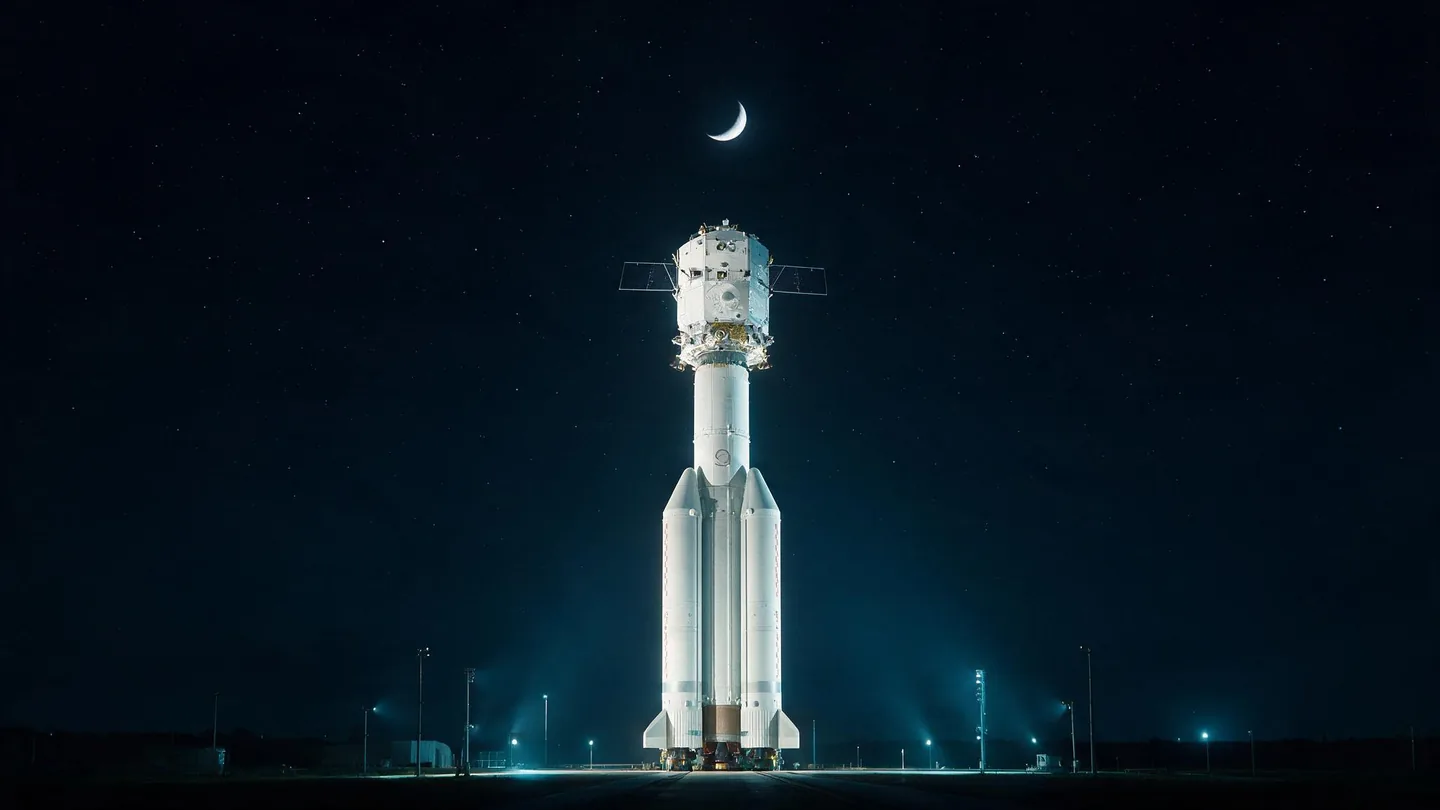
On August 23, China's human spaceflight agency formally announced that the Chang'e 7 lunar exploration mission, after comprehensive review, does not meet launch conditions and will not proceed during its 2026 window. The mission, originally scheduled to lift off from the Wenchang Spacecraft Launch Site in late August, has been rescheduled to 2027, with the next suitable window expected around mid-August next year.
Why the delay: weather and technical readiness
The postponement is the result of several overlapping factors:
- Typhoon weather impact: Recent typhoon activity around the Wenchang launch site has significantly disrupted ground support and tracking conditions, making it difficult to ensure a stable launch window.
- Technical review: In official wording, the decision follows the principle of "ensuring absolute success" — while the rocket and spacecraft are basically ready, overall conditions did not meet launch standards.
- Window scarcity: The lunar south pole polar-daydaylight orbital window opens only about once per year; once missed, the wait is nearly a full year.
Chang'e 7 was aiming for an August 24, 2026 launch to conduct detailed exploration of the lunar south pole, with a focus on water-ice detection and key technologies needed for future crewed lunar landings.
Mission profile: flagship south-pole science mission
Chang'e 7 is a core mission of China's fourth lunar exploration phase. It comprises an orbiter, lander, rover, and a hopping probe designed for close-up investigation of permanently shadowed craters at the south pole, seeking direct evidence of water ice and assessing resource potential. The mission also serves as a precursor for the International Lunar Research Station (ILRS).
- Science goals: comprehensive survey of south polar topography, composition, water-ice distribution, and space environment
- Key innovation: a hopping probe for close-range exploration of permanently shadowed craters
- Design life: 100+ days on the lunar surface
International competition context
The Chang'e 7 delay adds a new variable to the international race for lunar south pole exploration. Multiple nations are advancing their own polar missions:
- NASA's VIPER rover is targeted for launch around 2028
- India, South Korea, and others are preparing their own lunar missions
- Commercial landers (e.g., Intuitive Machines) are accelerating their development
Notably, Chinese officials have stated the delay will not affect the overall plan for crewed lunar landings before 2030, as crewed landing site selection does not solely depend on south polar data.
Hanxing Insight
Postponements of major space missions are not uncommon in global space history — especially for deep-space missions, where "ensuring absolute success" always comes first. From a commercial launch perspective, the scarcity of launch windows and uncontrollable factors such as weather are critical variables that must be factored into launch service planning. As a full-service provider for global small-satellite launches from China, Hanxing understands the uncertainty of launch schedules well. We maintain close communication with all launch providers to deliver timely window updates and backup options, helping satellite operators minimize the impact of launch delays.