
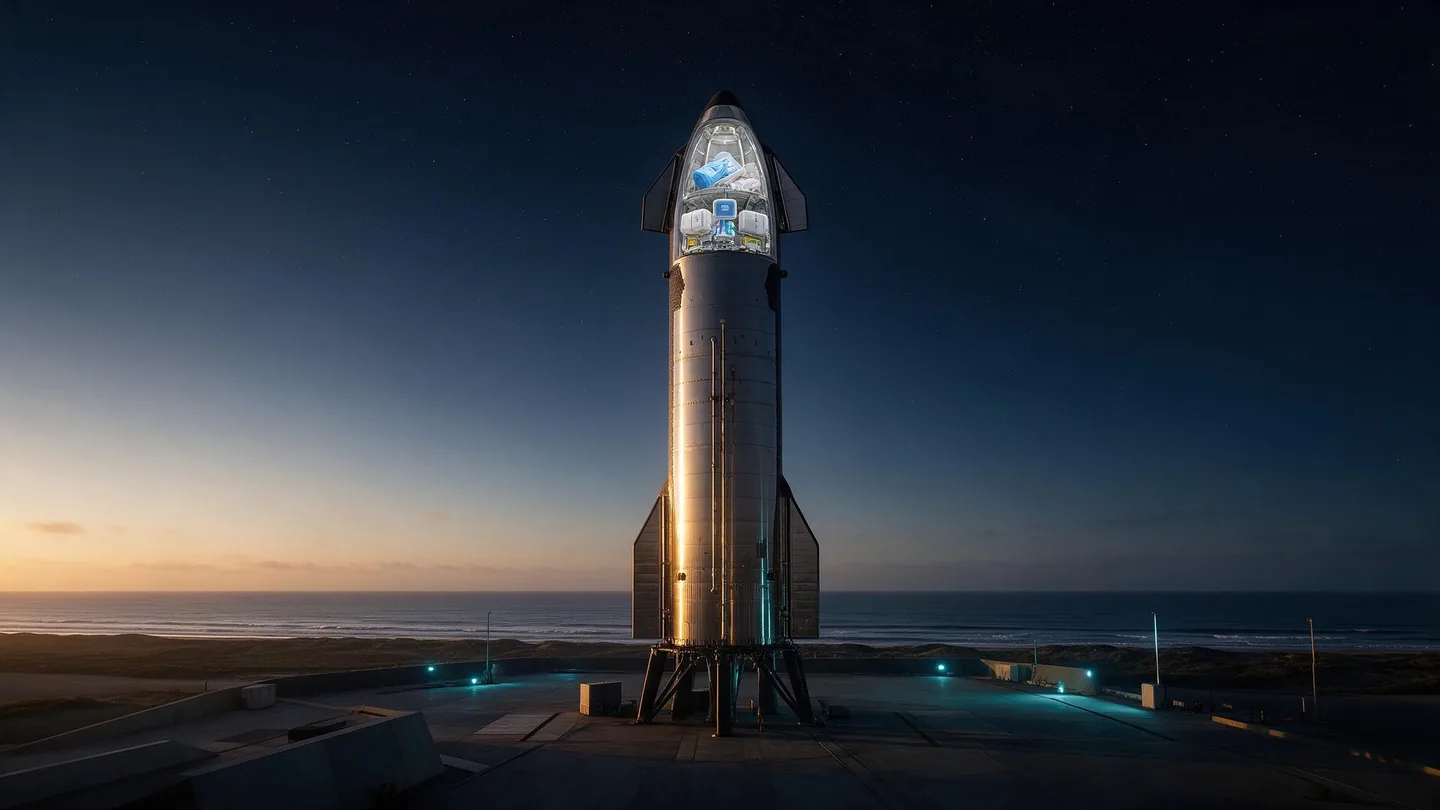
Lihong-2: A Reusable Vehicle Designed for Space Tourism
On September 28, CAS Space announced the deepening of its space pharmaceutical cooperation, with its Lihong-2 reusable launch vehicle scheduled to carry pharmaceutical payloads on a suborbital flight verification mission in the first quarter of 2027. The initial payloads will conduct protein and small-molecule drug crystallization experiments, performing preliminary technical verification of space-based pharmaceutical manufacturing equipment.
Lihong-2 is China's first reusable vehicle designed for space tourism, capable of more than 30 repeat flights and offering high-reliability, low-cost space tourism and scientific research services. The vehicle is designed to fly above the Karman line, providing approximately 4 minutes of microgravity environment. As a space science research platform, the Lihong series can also address key scientific and technical questions related to microgravity and space radiation, supporting China's crewed lunar missions and deep space exploration programs.
Space Pharmaceuticals: Unique Advantages of Microgravity
The core value of space-based pharmaceutical manufacturing lies in the unique experimental conditions provided by the microgravity environment. On Earth, protein crystallization is affected by convection and sedimentation, limiting crystal quality. In microgravity, proteins can form larger, more uniform crystals, helping scientists analyze molecular structures more precisely and accelerating drug discovery.
Wang Yingcheng, Executive Deputy Director of CAS Space Innovation Research Institute, emphasized the importance of not only "sending pharmaceutical payloads into space" but also building a complete system covering "upward transport — space experiments — safe return — ground delivery," with standardized payload interfaces for research institutions and enterprises.
From Launch Services to Microgravity Research Platforms
Lihong-2's space pharmaceutical program represents a significant expansion of China's commercial space application scenarios. For a long time, Chinese commercial space companies focused primarily on satellite launches and constellation networking. Lihong-2 transforms the reusable launch vehicle into a microgravity research service platform, opening new commercialization pathways.
Globally, space-based pharmaceutical manufacturing is becoming a frontier in space commercialization. American companies like Varda Space have already demonstrated in-orbit drug crystal production and successful return. CAS Space's Lihong-2 approach follows a suborbital flight route — although microgravity duration is shorter, costs are lower and return is faster, making it ideal for preliminary technology verification and iterative optimization.
Building a Complete Space Experiment Ecosystem
CAS Space emphasized that Lihong-2 is not just about "sending things up" but building a complete space experiment ecosystem. From standardized payload interface design to microgravity experiment workflows to sample delivery after safe return, each step requires precise engineering.
Lihong-2's reusability means significantly lower per-experiment costs. By design, the vehicle can perform over 30 repeat flights with short maintenance cycles between missions, potentially achieving a high-frequency operational cadence of multiple launches per month. This is critical for pharmaceutical research requiring iterative experimental conditions.
Hanxing Insight
CAS Space's integration of reusable launch vehicle technology with space pharmaceuticals demonstrates a new trend in China's commercial space sector: extending from "launch capacity supply" to "application services." Reusable vehicles lower the barrier to microgravity experiments, serving not only the pharmaceutical industry but also opening new research paradigms in materials science and biotechnology. Hanxing — your global small satellite Chinese launch service advisor — monitors China's commercial space reusable launch technology and its diversified applications, providing clients with launch consulting and Chinese launch solutions. As China's reusable rocket technology matures, the commercial prospects of the microgravity research services market are promising, and more international clients will be able to access cost-effective space experiment opportunities through Chinese commercial launch services.