
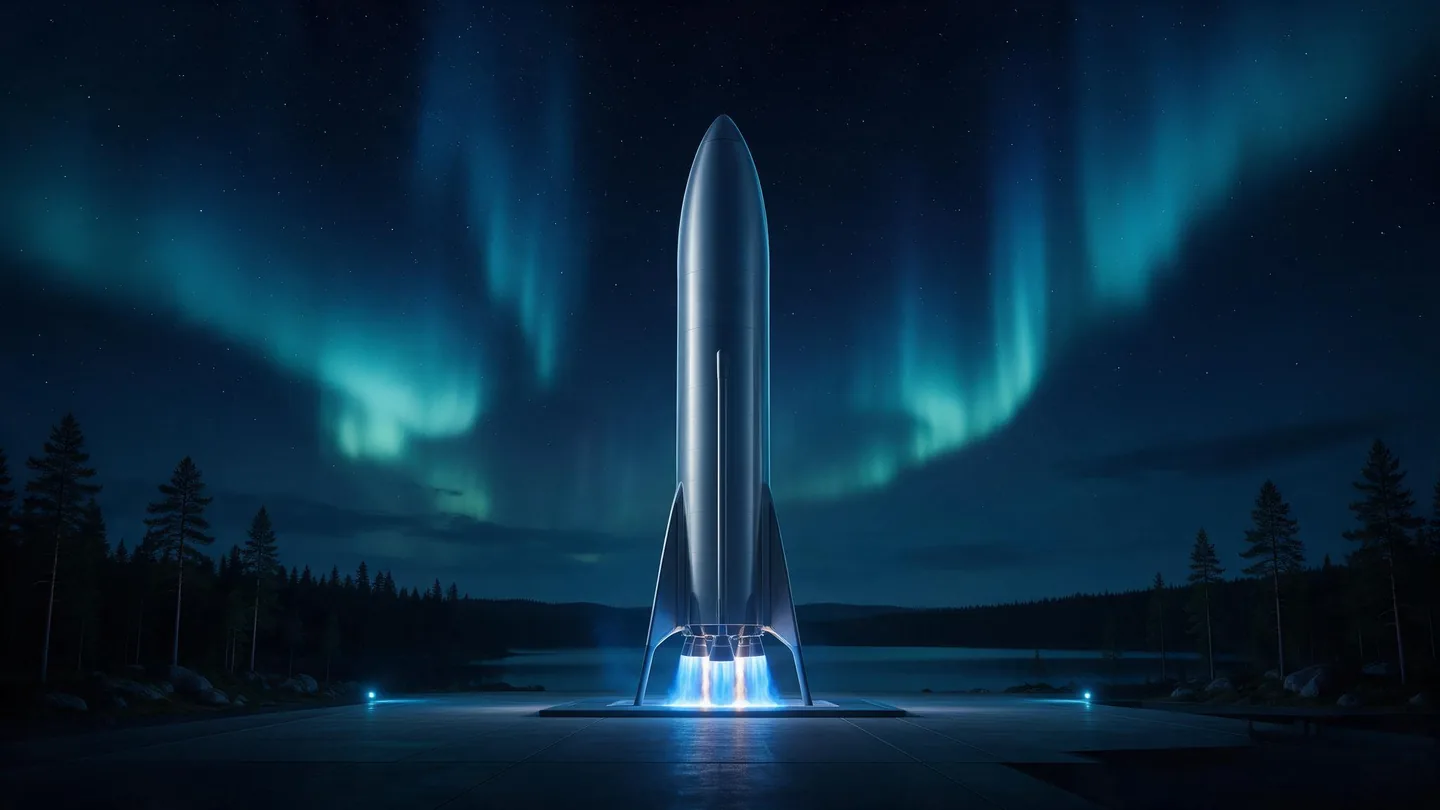
Canada is a major spacefaring nation — yet for decades it has lacked any domestic ability to reach orbit, relying entirely on US, European, or Russian rockets to loft its satellites and payloads. That is changing fast. A new startup called Canada Rocket Company is pushing aggressively to develop a reusable medium-lift launch vehicle named R-2, aiming to bring Canada into the exclusive club of nations with sovereign access to space.
The R-2: A Reusable Methalox Medium Launcher
Canada Rocket Company's flagship product is the R-2, a reusable medium-lift rocket powered by liquid oxygen and methane. According to the company, R-2 can deliver 12,500 kilograms to sun-synchronous orbit and more than 15 tons to low-Earth orbit — placing it firmly in the medium-lift category alongside vehicles like Falcon 9 and Vega-C.
The first stage is powered by seven E-1 methalox engines and is designed for vertical recovery and reuse. The company is pursuing a two-stage development strategy: a small pathfinder vehicle called R-1 will validate key technologies, while the company moves quickly toward its first commercial launcher, the medium-lift R-2.
What makes the endeavor notable is the team behind it. Canada Rocket Company has assembled veteran engineers from SpaceX, Blue Origin, and other leading commercial aerospace firms — many of them Canadian nationals returning home. Industry observers say this "brain-gain" approach is key to Canada's strategy of closing its launch-capability gap in record time.
Geopolitics and Sovereign Launch
The push for domestic launch capability is driven by more than just commercial ambition. As US-Canada relations have shifted in recent years, Canada has grown concerned about reliable access to US launch services. For a country with significant satellite assets in orbit, the inability to launch independently represents a clear national-security and economic vulnerability.
The Canadian government has been ramping up support for the domestic space sector. While several other Canadian startups are working on small-lift vehicles, the R-2 stands out as the only domestic proposal targeting the medium-lift, reusable segment — the sweet spot of the emerging commercial market.
Opportunity in the Medium-Lift Market
From a market perspective, the R-2 enters a medium-lift reusable rocket segment that is seeing growing demand. As large mega-constellations move beyond their initial deployment phases, an increasing share of launch missions require medium-class capacity — not the heavy lift of a Falcon 9, nor the niche offering of a dedicated smallsat launcher.
If the R-2 enters service on schedule, it could serve not only Canada's domestic needs but also carve out a share of the international commercial launch market, particularly for satellite operators seeking diversification of their launch supply chain.
Hanxing Perspective
The global commercial launch market is evolving from a single dominant player toward a more diversified landscape. At Hanxing — your trusted advisor for small-satellite launch services from China — we follow these shifts closely. For small-satellite operators worldwide, more launch options mean more flexible windows, more competitive pricing, and more resilient supply chains. Whether it is China's growing fleet of commercial Long March vehicles or emerging medium-lift providers around the world, Hanxing helps clients navigate the full spectrum of launch solutions, from mission planning to integration and liftoff.