
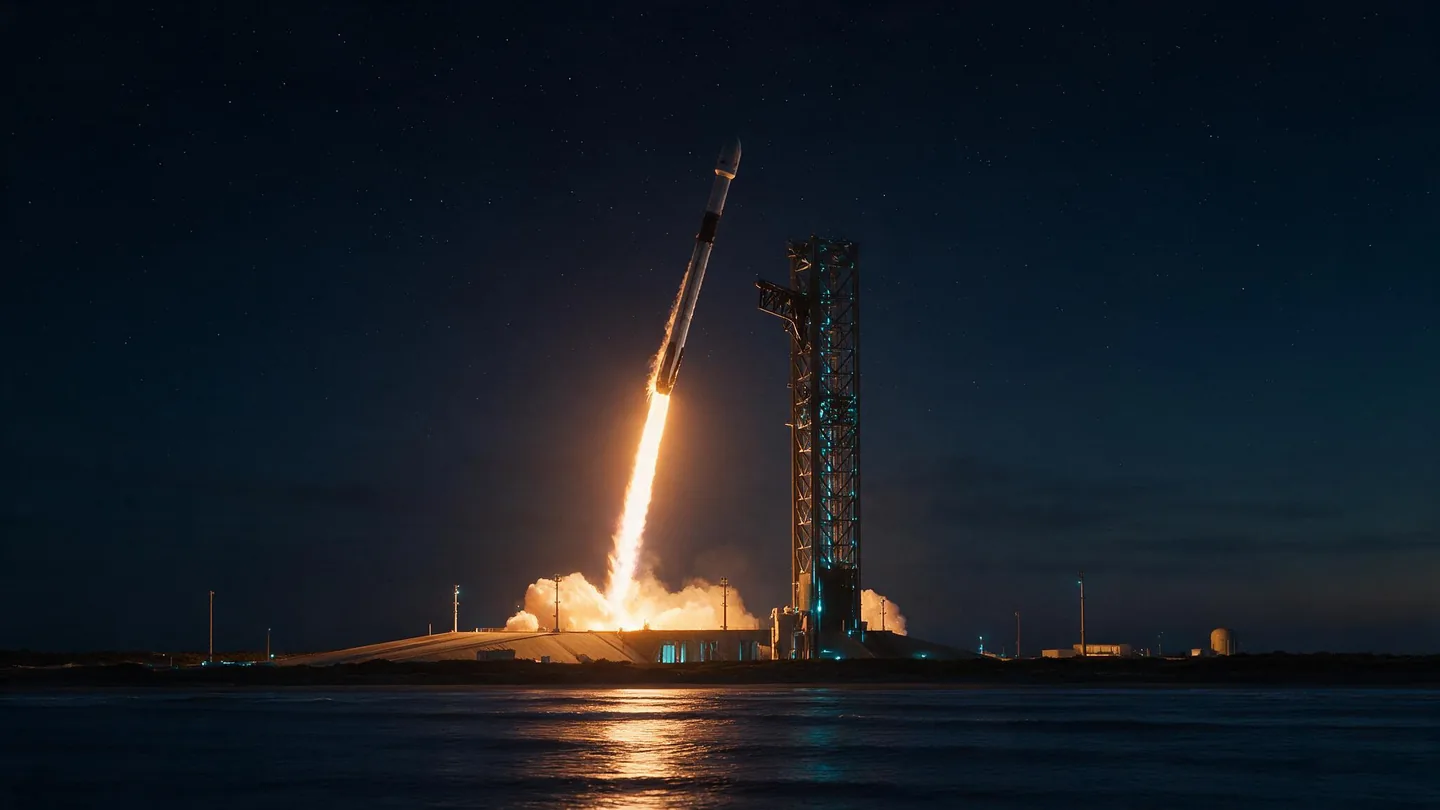
For the past decade, Florida's Cape Canaveral Space Force Station and NASA's Kennedy Space Center have been the world's busiest spaceport. That is about to change. SpaceX Vice President of Launch Kiko Dontchev confirmed that the company will significantly reduce its Florida launch cadence until Starship begins flying from the state.
Cadence Adjustment
A Falcon 9 launch early on August 26 was the last planned Starlink mission from Cape Canaveral until SpaceX begins flying Starship missions from Florida. This means the Florida spaceport's launch rate will drop from eight or nine per month to perhaps two per month.
- The Falcon 9 executed 165 launches last year — about three flights per week — with approximately 75% carrying Starlink satellites
- Since January, SpaceX has increasingly shifted launches to its West Coast pad at Vandenberg Space Force Base in California
- This trend will amplify for the remainder of the year
"From here on, Starlink missions out of Florida will fly on Starship," Dontchev wrote on X. "The West Coast team will continue regularly launching Starlink from Vandenberg."
Transition to the Starship Era
SpaceX plans to phase out the Falcon 9 in favor of Starship for commercial missions, creating a transitional gap in Florida launch activity. While SpaceX maintains its goal of beginning Starship launches from Launch Complex 39A by the end of this year, the amount of work remaining and the lack of indication of imminent Starship transport from the South Texas factory to Florida make a mid-2027 debut from Kennedy Space Center more likely.
Starship is designed to launch up to 60 Starlink Version 3 satellites at once — larger, heavier, and more powerful than the Starlink V2s currently flying on Falcon 9. SpaceX plans to use the next Starship test flight, designated Flight 14, to launch the first Starlink V3s into low-Earth orbit from Starbase, Texas.
Notable Details
The early morning launch was noteworthy for two reasons. First, the Falcon 9 first-stage booster flew its 37th mission, setting a new fleet reuse record. Second, the pre-sunrise timing allowed skywatchers along the East Coast to witness the Falcon 9 rocketing northeast from Cape Canaveral.
SpaceX has launched approximately 260 Starlink missions on Falcon 9 from Florida. Going forward, all Falcon 9 and Falcon Heavy launches from Florida will carry customer payloads. The next is scheduled for August 30, when a Falcon Heavy lifts off from Launch Complex 39A with NASA's Nancy Grace Roman Space Telescope.
Industry Impact
This cadence adjustment carries far-reaching implications for the global launch market. SpaceX's plan to phase out Falcon 9 for commercial missions after 2028 has already raised customer concerns about reliable launch service availability. With global launch capacity already under severe strain, reduced Florida launch frequency could further exacerbate the shortfall.
Hanxing Perspective
The world's busiest spaceport entering a quieter transitional period reflects a generational shift in launch vehicles. Starship's commercial deployment will redefine the ceiling for launch cost and capacity, but the capacity vacuum during the transition also creates market opportunities for other launch providers. Hanxing continuously tracks global launch capacity supply changes, helping small-satellite clients secure optimal launch solutions during capacity-tight cycles and ensuring constellation deployment schedules remain on track.