
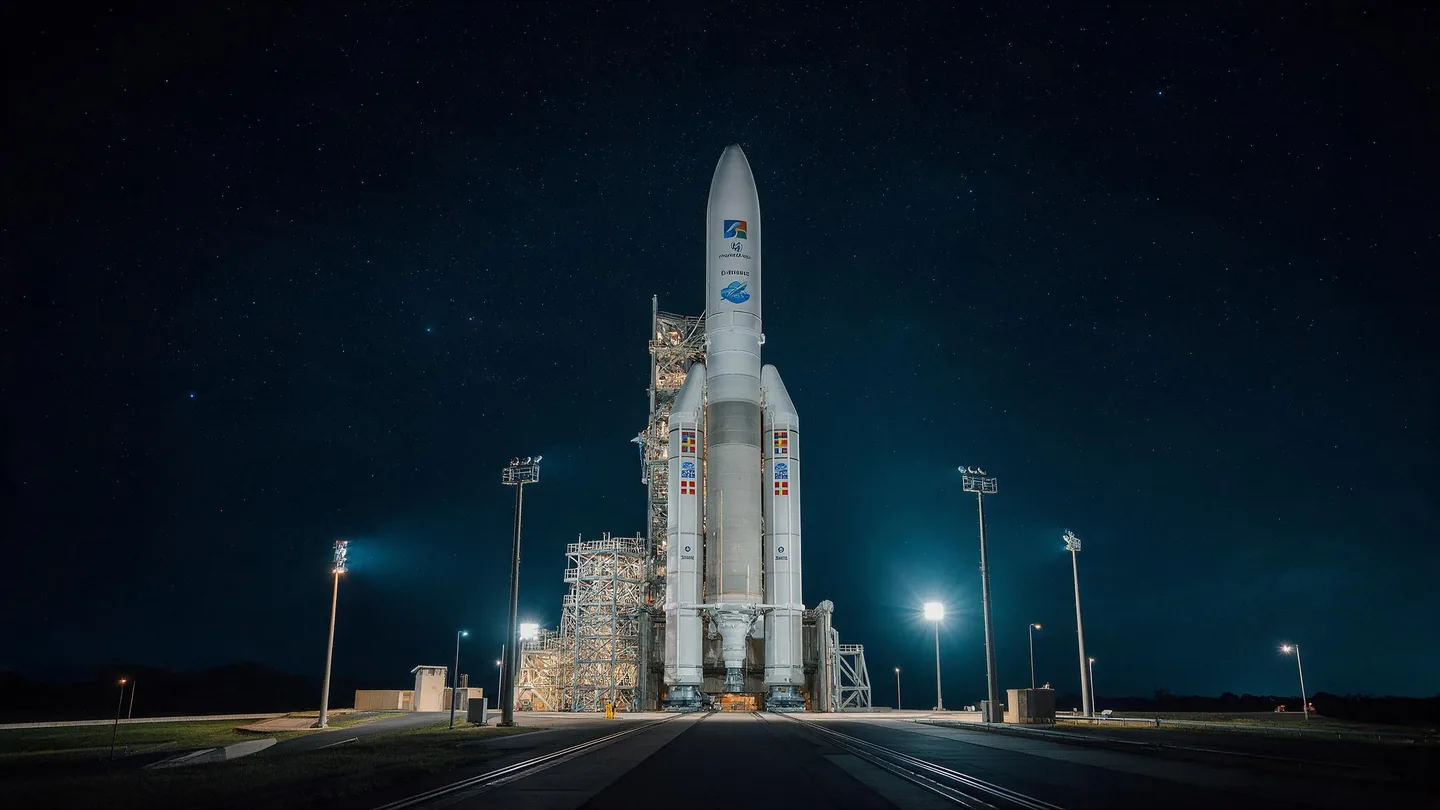
Industry reports confirmed that Europe's flagship heavy-lift rocket, Ariane 6, had its launch cadence slowed after an engine turbopump anomaly was detected during ground evaluations in August. Launch operator Arianespace had planned eight Ariane 6 flights in 2026, but that target has now been cut to six or fewer, with four missions completed so far this year.
The anomaly and recovery
The issue involves a turbopump component within the rocket's propulsion stage, found during post-flight inspections and ground testing. Because technical checks and potential component remediation are required, launch activity at the Kourou spaceport was temporarily paused. Once the propulsion subsystem is cleared for flight, operations will resume to complete the year's fifth and possibly sixth mission.
A stalled ramp-up
Since its maiden flight in 2024, Ariane 6 has been climbing from restoring autonomous access to space toward a stable, high-rate launch rhythm. Arianespace had planned to step from six flights in 2025 to eight in 2026, then stabilize around ten per year from 2027. The turbopump anomaly interrupts that climb and exposes the engineering challenge Europe faces in raising its launch frequency quickly.
Impact on the global launch market
With European capacity shrinking and America's next-generation rockets yet to deliver stable capacity, pressure on global commercial launch supply is shifting toward markets with high-density launch capability, such as China. For satellite operators that depend on launch windows, one more reliable option means one more degree of certainty in their constellation schedule.
Hanxing observation
Ariane 6's setback is another reminder that stable, high-frequency heavy-lift launch does not come overnight. As Hanxing — the global small-satellite launch service consultant in China — we advise smallsat customers to diversify their launch plans and avoid over-reliance on a single rocket or market. With China's commercial rockets raising their launch cadence and multiple reusable vehicles coming online, Chinese launch solutions are becoming an increasingly dependable choice for global smallsat customers — whether for constellation deployment, rideshare to orbit or full satellite delivery, Hanxing can help match customers with the most suitable Chinese capacity and timing.