
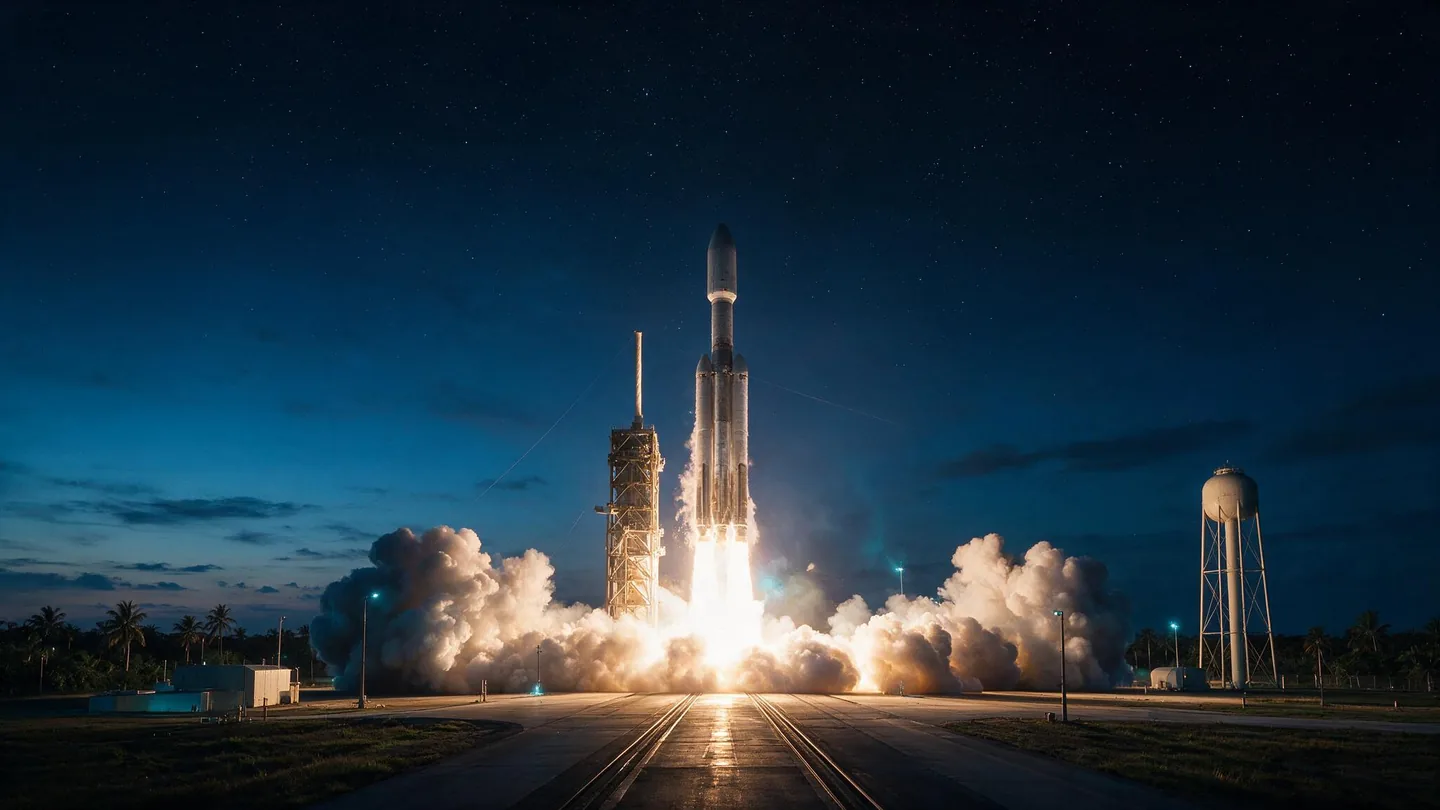
On August 27, an Ariane 6 rocket successfully launched Europe's MTG-I2 (Meteosat Third Generation Imager-2) weather satellite from the European Spaceport in Kourou, French Guiana, completing the first trio of the Meteosat Third Generation constellation.
Launch Details
The Ariane 62 configuration, equipped with two P120C solid-fuel boosters, delivered MTG-I2 into a Geostationary Transfer Orbit (GTO). This marked the ninth mission for Ariane 6 and the first time Europe's heavy-lift launcher carried a satellite to GTO, achieving the greatest distance the rocket has reached to date. After satellite separation, ground teams successfully established communication with the spacecraft, and solar panels deployed as expected.
Thales Alenia Space served as prime contractor for the satellite, built in collaboration with OHB. The launch was operated by Arianespace.
Constellation Completion
With the launch of MTG-I2, the first imaging trio of Europe's Meteosat Third Generation (MTG) constellation is now complete. The satellite will operate in tandem with Meteosat-12 (MTG-I1), launched in 2022, and MTG-S1, launched in July 2025, forming a full third-generation meteorological observation system.
EUMETSAT, the European meteorological satellite agency, confirmed that MTG-I2 is in orbit and operating as expected. The satellite will provide more frequent observations, refreshing imagery every 2.5 minutes, helping meteorological services identify hazardous weather developments sooner.
Technical Highlights
MTG-I2 carries a Lightning Imager capable of detecting and mapping individual lightning discharges day and night, representing a significant upgrade to Europe's weather observation capabilities. The satellite is also equipped with a Flexible Combined Imager (FCI) designed to provide frequent, high-resolution Earth observations.
The third-generation Meteosat system will play a critical role in tracking atmospheric fronts, predicting severe storm formation, and monitoring fires and air pollution, with particular focus on Europe, the Mediterranean, and North Africa.
Hanxing Take
Weather satellites represent a vital area where space technology serves public welfare. The completion of the MTG constellation reflects Europe's sustained investment and technological accumulation in geostationary weather observation. For the commercial space sector, continuous improvements in weather data not only serve public safety but also provide critical support for commercial decision-making in agriculture, aviation, and maritime industries. As a full-chain launch service provider for small satellites from China, Hanxing monitors the launch needs of various application satellites and looks forward to providing efficient launch services for more weather, remote sensing, and civil satellites.