
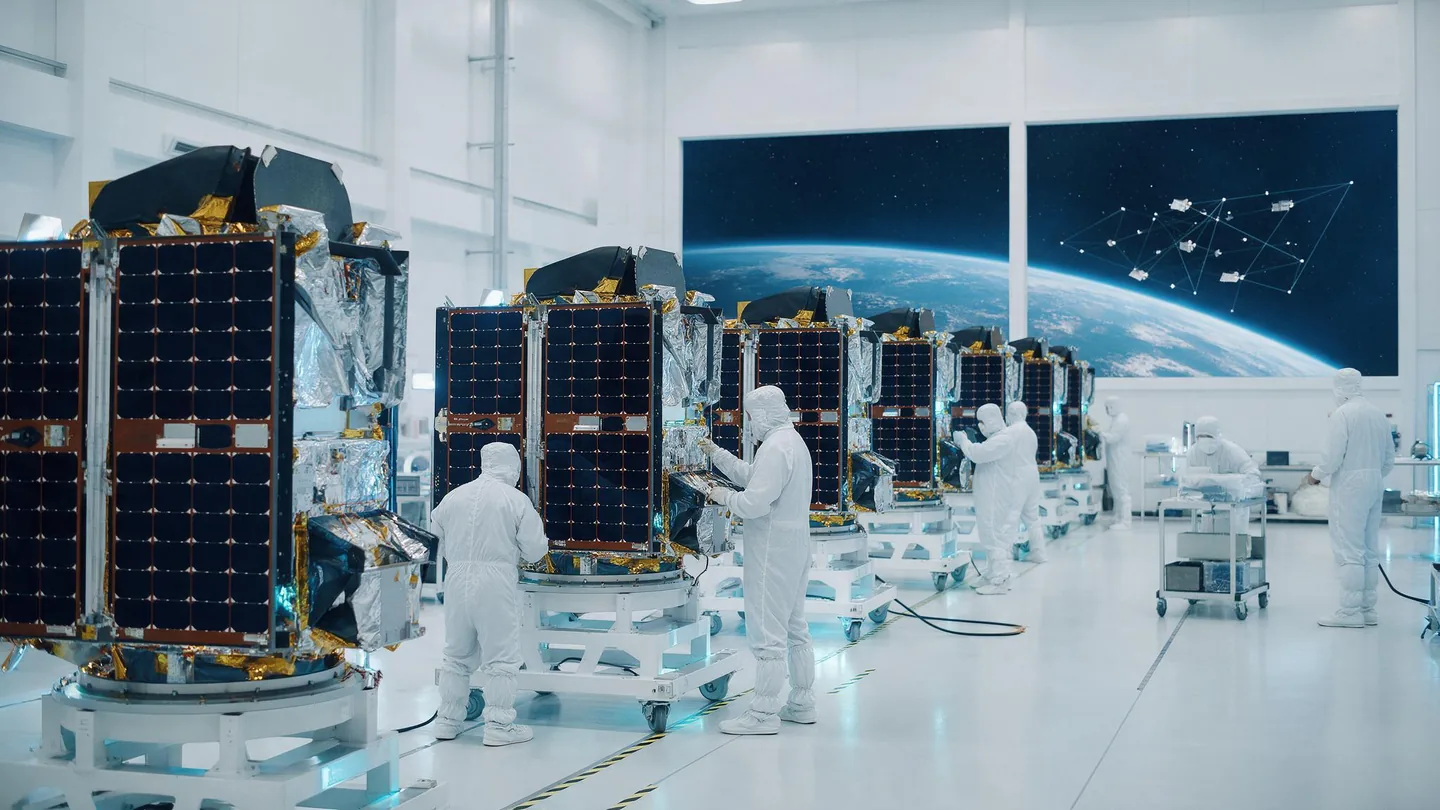
1,000 Satellites Built: A Manufacturing Milestone
Amazon recently announced that its satellite manufacturing facility in Kirkland, Washington has produced the 1,000th satellite for its Kuiper broadband constellation, now branded Amazon LEO (Low Earth Orbit). This milestone marks the project's full transition from prototype development to mass production, laying the manufacturing foundation for rapid constellation deployment.
Formerly known as Project Kuiper, Amazon LEO plans to deploy 3,236 satellites in low Earth orbit to provide high-speed broadband internet service worldwide. The project has already attracted over $10 billion in investment, making it one of Amazon's largest infrastructure initiatives to date.
Service Launch Imminent: Commercial Access by Year-End
According to Dave Limp, Amazon's Senior Vice President of Devices and Services, 396 Kuiper satellites are currently in orbit, with some still raising their orbits to final operational altitudes. Company executives confirmed in recent interviews that the existing on-orbit constellation is already sufficient to launch initial service — upcoming launches will expand coverage and add network resilience.
Amazon plans to roll out limited beta service in the United States, United Kingdom, France, Germany, and Canada by the end of 2026, with broader coverage to follow. Interested users can join a public waitlist on Amazon's website to become among the first customers.
This timeline is slightly later than originally projected, but remains within industry expectations given supply chain challenges and the complexity of satellite manufacturing. By comparison, SpaceX's Starlink constellation already has over 6,000 satellites in orbit serving more than 7 million customers globally, maintaining a significant first-mover advantage in the LEO broadband market.
Largest Commercial Launch Procurement: Five Rocket Families
To deploy all 3,236 satellites by 2030, Amazon has signed the largest commercial launch procurement in history — over 80 missions across five different rocket families:
- Atlas V 551 (ULA): 9 missions carrying 27–29 satellites each; 7 flown, with the fleet nearing retirement
- Falcon 9 (SpaceX): 13+ missions carrying 24 satellites each; 3 completed
- Ariane 64 (Arianespace): 18 missions carrying 32 satellites each — the highest per-launch capacity; 2 completed
- Vulcan Centaur (ULA): 38 missions, expected to begin Kuiper launches in 2026–2027
- New Glenn (Blue Origin): 12+ missions; maiden flight completed in 2025, Kuiper missions TBD
Amazon plans to execute 20+ launch missions in 2026, ramping up to 30+ in 2027. This multi-supplier strategy both diversifies launch risk and leverages competition among the world's leading commercial launch providers to control costs.
Competitive Landscape: Global Satellite Internet Accelerates
Amazon LEO's accelerating deployment signals that the global LEO satellite internet market is evolving from a Starlink-dominated landscape toward a two-major-player dynamic. While Starlink retains a substantial lead in on-orbit scale and subscriber count, Amazon LEO, backed by Amazon's financial strength and global commercial network, is well-positioned to compete in enterprise markets, aviation and maritime connectivity, and government services.
For the global smallsat industry, the race between the two megaconstellations is driving sustained demand for launch services and accelerating innovation across satellite manufacturing, user terminals, and space situational awareness. At the same time, orbital resource competition and space debris concerns generated by megaconstellations are drawing growing international attention, making orbital coordination and space traffic management critical new challenges for the industry.
Hanxing Insight: Amazon LEO's 1,000-satellite milestone once again confirms a clear trend — global LEO satellite internet is moving from concept to large-scale commercial operation. For customers planning to deploy smallsat constellations, selecting the right launch service provider and deployment cadence has never been more critical. As Hanxing — Global Smallsat China Launch Service Advisor, we have in-depth knowledge of China's commercial launch capabilities and resources, providing overseas smallsat customers with professional consulting services ranging from vehicle selection and mission planning to end-to-end project management. Whether you prefer the reliability of China's Long March rocket family or the flexibility of emerging commercial launch vehicles, Hanxing can help you find the optimal China launch solution for your constellation deployment — making your network rollout more efficient, cost-effective, and reliable.